50 Common CNC Mistakes and How to Avoid Them
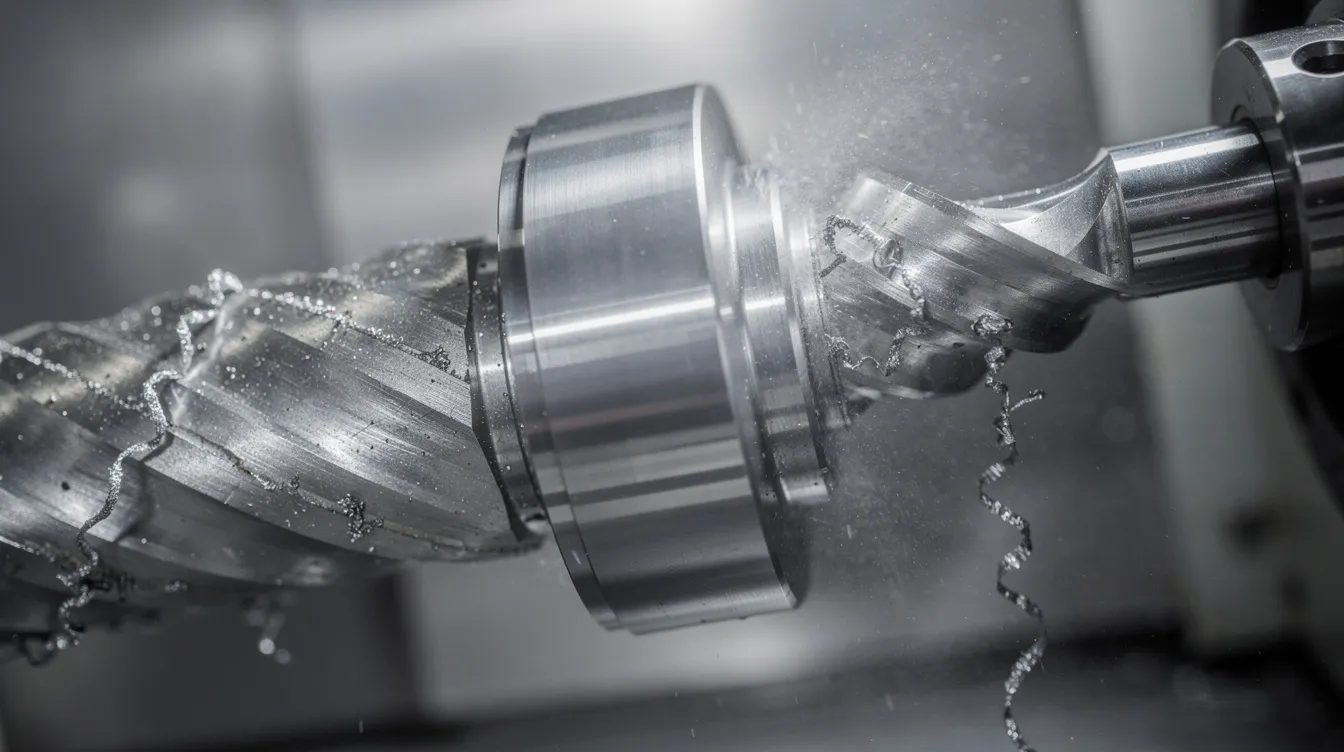
In Manchester precision engineering, a single CNC error can cascade into scrapped parts, blown delivery schedules and damaged client relationships. Whether you run CNC turning, CNC milling, cylindrical grinding or keyway slotting, the same mistakes tend to repeat across shops and industries. Manchester is a significant hub for precision engineering, serving demanding sectors like automotive, aerospace, medical and food manufacturing. At Elmax Engineering Ltd, we've spent over two decades helping clients achieve tight tolerances and reliable delivery — and we've seen these errors firsthand. This guide lists 50 of the most common CNC mistakes and gives you practical ways to avoid every one.
How We Identified These Common CNC Mistakes
We selected these 50 mistakes based on frequency in machining failure reports, severity of impact on quality and cost, and direct feedback from CNC machining professionals across the UK. Our analysis spans CNC turning, CNC milling, cylindrical grinding and keyway slotting, covering errors that affect both prototyping and batch production.
Programming and Setup Mistakes (1–15)
CAD/CAM Programming Errors
Design for Manufacture supports cost-saving improvements and optimises production — but these five mistakes undermine it:
- Over-tolerancing non-critical features — specifying ±0.001mm everywhere when only mating surfaces need it doubles machining time and cost.
- Sharp internal corners without radii — square inside corners force tiny tools, increase deflection and accelerate wear.
- Poor tool access planning for deep cavities — deep pockets and undercuts cause chatter when CAM toolpaths ignore tool engagement limits.
- Conflicting dimensioning and datum references — mixed units, missing GD&T and over-constrained dimensions lead to wrong feature locations.
- Default CAM toolpaths without material-specific tailoring — using identical step-over for steel and aluminium ignores that each material demands different surface speed and feed rates.
Machine Setup and Fixturing Issues
Setup mistakes affect every cut. In metal machining and fabrication, these five are the most damaging:
- Insufficient workholding — standard clamps on odd-shaped parts allow movement, vibration and distortion.
- Poor workpiece alignment — misaligned datum surfaces produce off-axis features; critical in turning and grinding.
- Excessive tool overhang — extending a cutting tool beyond 4× shank height causes measurable deflection and chatter.
- Skipping stress relief on raw material — residual stresses from rolling or forging cause warping during machining.
- Uncalibrated machines — backlash, spindle runout and worn guideways degrade repeatability across every operation.
Tool Selection and Preparation Errors
- Wrong tool grade for the material — HSS where carbide is needed, or the wrong coating for titanium alloys, leads to premature failure.
- Running dull tools — worn inserts increase cutting forces and lose dimensional control.
- Incorrect tool offsets — failing to update work offsets after fixture changes causes feature misplacement.
- Wrong geometry for specific metals — aluminium sticks to TiN coatings; stainless steel needs positive rake to avoid work hardening.
- Unbalanced tool holders — imbalance magnifies error in high-speed milling and grinding.
Machining Process Mistakes (16–35)
CNC Turning Specific Errors
Our CNC turning services use a single-point cutting tool on rotating workpieces, producing parts up to 1500mm long with tolerances as tight as ±0.05mm and excellent surface finishes. These seven mistakes compromise those capabilities:
- Static speed and feed across materials — aluminium 6061 runs at 250–500 m/min surface speed; stainless steel at 90–150 m/min. One setting for both destroys tools.
- Aggressive roughing on unsupported bars — long shafts bend and chatter without tailstock or steady-rest support.
- Misusing constant surface speed vs fixed RPM — not using G96 when diameter changes causes varying chip load and risk of rubbing.
- Ignoring tool wear monitoring — no tracking means tolerance drift goes undetected until parts fail inspection.
- Poor chip evacuation in boring — recut chips generate heat, built-up edge and poor surface finish.
- Chuck jaw pressure errors — uneven jaw pressure or worn centre holes produce runout and taper on turned parts.
- Skipping spring passes — omitting a final light pass to compensate for deflection leaves parts oversize.
CNC Milling Operation Mistakes
Our CNC milling service typically uses a 3-axis system, with 5-axis capability for complex geometries. These seven mistakes are widely seen in precision milling:
- Climb vs conventional milling misuse — climb milling gives better finish but can lift parts if workholding is weak.
- Excessive stepover in finishing — roughing stepover on finish passes creates scalloping that fails Ra specifications.
- Uncontrolled vibration and chatter — a flexible workpiece, long tools and spindle runout create ghost textures.
- Thermal distortion during milling — internal stresses and heat buildup warp thin-wall aluminium and plastic parts.
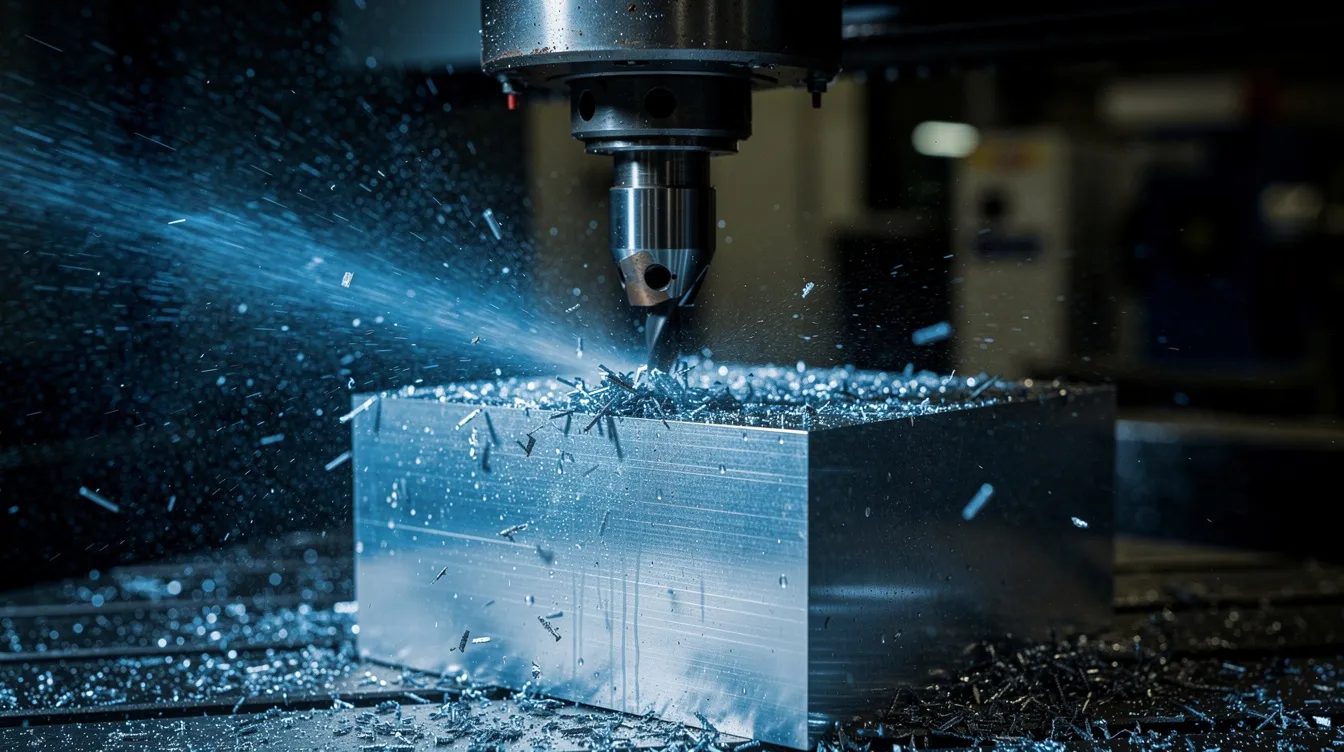
- Poor coolant delivery in deep pockets — chips stick, heat builds and tools fail prematurely.
- Bad entry and exit toolpath planning — sudden tool engagement on corners causes shock and overcut.
- Tool deflection in slot milling — excessive radial depth forces tools laterally, ruining slot geometry.
Specialised Process Errors
Our cylindrical grinding services achieve tight tolerances and smooth finishes by rotating the workpiece against a grinding wheel — commonly used for crankshaft and camshaft grinding in automotive and aerospace. Keyways demand their own discipline. Here are six mistakes specific to these processes:
- Wrong grinding wheel specification — mismatched grit or bond hardness causes glazing or burn.
- Workpiece misalignment in grinding — a misaligned tailstock or worn centres produce taper on high length-to-diameter parts.
- Thermal expansion drift — a 1°C change in a 300mm steel shaft causes roughly 3.6μm dimensional change.
- Improper wheel dressing — worn dressers or the wrong dressing angle create conical wheels and taper errors.
- Keyway dimensional deviation — tool wear, feed displacement or weak coolant flow cause overshoot or poor surface quality. Our dedicated keyway slotting process avoids exactly these issues.
- Wrong keyway machining method — broaching a blind bore without relief, or slotting when speed demands another process, creates impractical lead times.
Quality Control and Inspection Mistakes (36–45)
Measurement and Inspection Errors
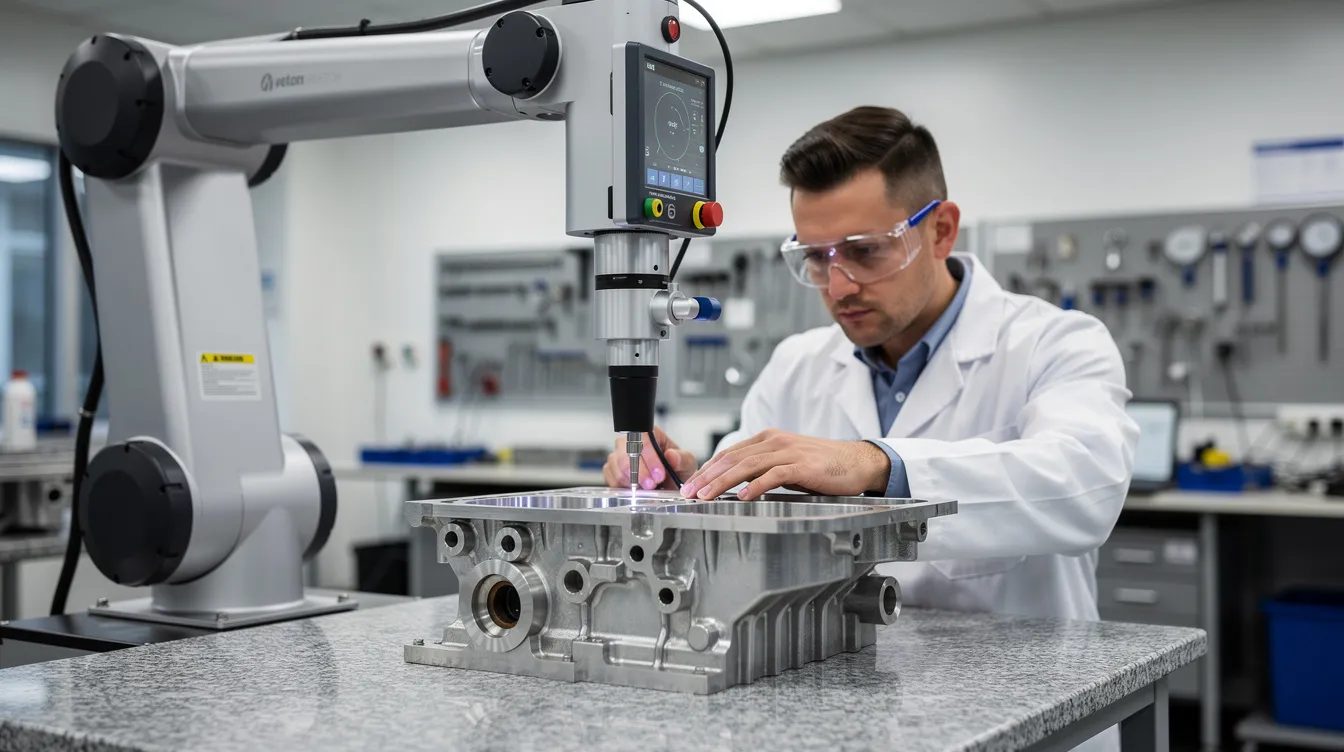
Quality assurance often includes ISO 9001 standards, with Coordinate Measuring Machines used for precision inspection. These five mistakes undermine it:
- Misinterpreting GD&T datum references — inspecting against the wrong datum surfaces causes false rejections or accepted bad parts.
- Using inappropriate measuring equipment — calipers where bore gauges or CMMs are needed introduce systematic error.
- Insufficient measurement sampling — checking a diameter at one point hides taper or out-of-round conditions.
- Ignoring environmental factors — measuring steel at uncontrolled temperatures shifts dimensions; the shop floor may vary ±5°C from the inspection lab.
- Delayed in-process inspection — waiting until the final piece means many components are out of spec before the problem surfaces.
Documentation and Traceability Issues
- Missing process documentation — operators guessing parameters leads to inconsistent components.
- Revision control failure — outdated CAD files or drawings with scaling errors waste entire batches.
- Calibration records not maintained — without records, equipment intervals slip and audit evidence disappears.
- No batch-level traceability — missing serial numbers or operator data makes recall impossible for medical or automotive clients.
- Inadequate inspection planning — QC plans that miss critical control points let defects pass through every stage.
Material Handling and Finishing Mistakes (46–50)
Material Management Errors
CNC machining can handle over 50 types of material, most commonly aluminium and stainless steel. These three mistakes affect material integrity:
- Stock with internal stresses — unrelieved material from forging or rolling warps during machining.
- Wrong material grade or batch variation — different suppliers deliver different machinability even within the same spec; tools and settings must adjust.
- Poor storage and handling — rust, dents and moisture damage require extra preparation and increase cost.
Final Processing and Delivery Issues
- Neglecting burrs and sharp edges — leaving burrs violates safety and functional requirements; medical parts often require Ra below 0.8μm.
- Packaging and labelling errors — scratched or contaminated parts from improper packaging cause returns and damage your place in the supply chain.
Quick Reference: Most Critical Mistakes to Avoid
| Category | Mistakes | Why Critical |
|---|---|---|
| Programming errors | 1–5 | Every downstream process depends on accurate software and CAD |
| Setup mistakes | 6–10 | Affect the accuracy of every cut |
| Tool selection errors | 11–15 | Drive quality and cost per part |
| Measurement mistakes | 36–40 | Determine whether parts meet spec |
| Material handling | 46–48 | Foundation for all precision work |
Implementing Mistake Prevention in Your CNC Operations
Prevention protocols by operation type. Turning and milling need CAD/CAM simulation, initial cut-test pieces and standardised programming checks. Cylindrical grinding demands separate protocols — wheel dressing schedules, alignment verification and thermal control. Keyway slotting requires fixture-specific SOPs. Collaborative engineering support matters for prototyping and scalability across all these processes.
Prevention by production volume. For high-volume production, invest in dedicated fixtures, in-process probes and statistical process control. For prototypes and small batches, prioritise flexibility — verify tools, mock up setups and tighten designer-shop communication to shorten lead times. Reliable delivery is crucial regardless of volume.
Quality assurance by industry. Medical manufacturers may require ISO 13485 alongside ISO 9001; automotive suppliers need IATF 16949; food and construction demand documented cleanliness and traceability. Match your process to the standard your clients expect, using certified instruments and controlled environments.
Which Prevention Strategy Fits Your Operation?
- Comprehensive programming checks — if your team handles complex turning and milling with deep pockets, internal features and tight tolerances.
- Setup standardisation — if you run high-volume batch production needing efficiency and consistency across lathe and milling capability.
- Enhanced quality assurance — if your clients span medical or automotive where traceability and detail are non-negotiable.
- Specialised training — if your expertise includes cylindrical grinding and keyway slotting, where process-specific knowledge drives accuracy.
The latest technology — in-machine probing, adaptive CAM toolpaths and real-time tool wear monitoring — supports all four strategies. The ability to perform at high precision across materials and geometries defines a competitive partner in Manchester's manufacturing landscape.
Final Thoughts
Every one of these 50 mistakes is preventable. The key is recognising which errors matter most to your specific operation and building prevention into your daily process, rather than relying on end-of-line inspection to catch problems. At Elmax Engineering Ltd, our commitment to precision, our expertise across industries and our in-house capability let us help companies avoid these pitfalls while delivering high-precision parts on schedule.
Whether you need a one-off prototype or a large-scale run, we're equipped to discuss your project in detail. If you've been searching for a CNC machining company in Manchester or Stockport, submit your enquiry and let us show you what two decades of Manchester precision engineering can achieve for your next development.