Automation in Manufacturing Reshapes CNC Machinist Roles, Not Replaces Them
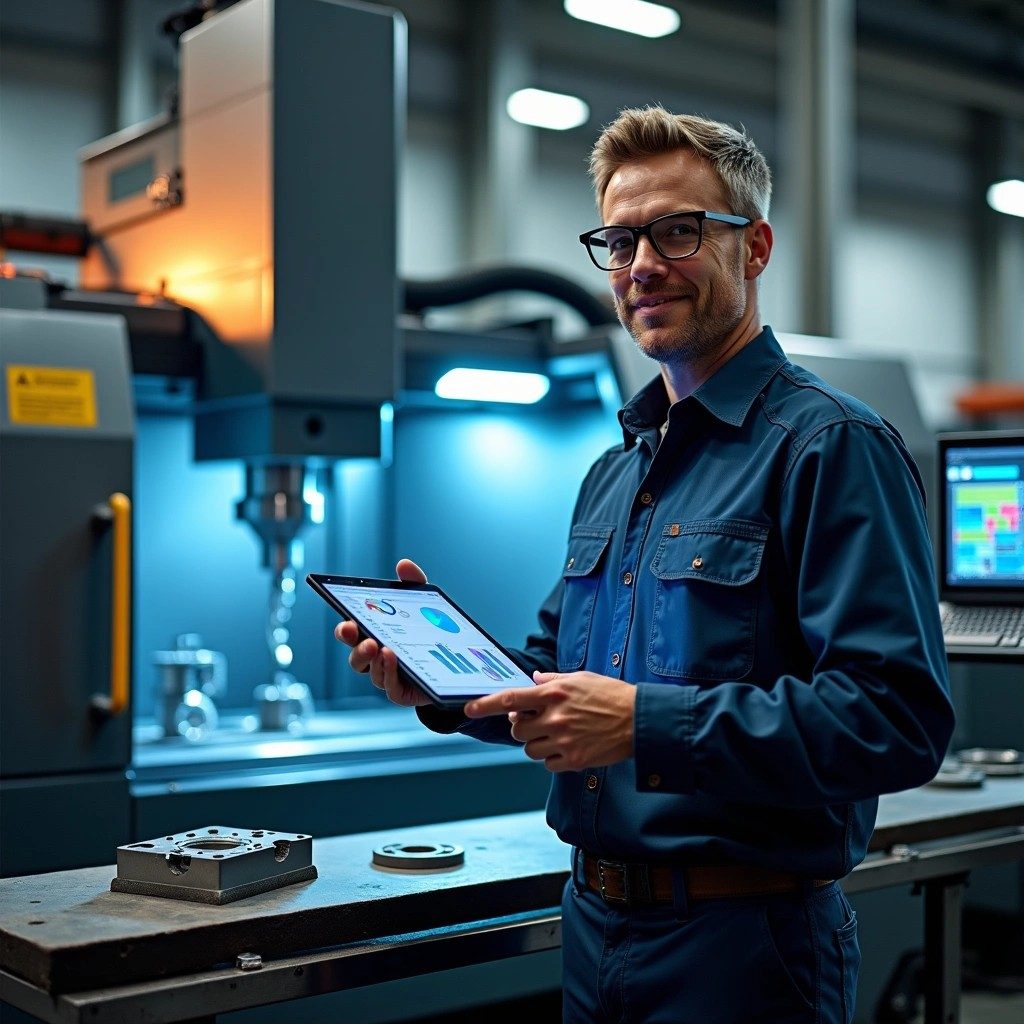
Automation in manufacturing is transforming CNC machinist roles rather than eliminating them, creating positions that blend technical expertise with intelligent system oversight. Machines handle repetitive programming and quality checks, while human operators provide critical judgment, creative problem-solving and adaptive strategies. As a CNC machining company offering precision engineering and machining services, we see this shift first-hand — it demands new skill sets combining traditional machining knowledge with data analytics, advanced CAM software and digital manufacturing technologies.
Automation Transforms CNC Machining Workflows, Not Workforce
Intelligent software now completes programming tasks that once consumed hours of manual CAM work. AI-powered tools can reduce CNC programming time by up to 75%, automating repetitive toolpath generation and process planning. These systems analyse historical machining data to suggest optimal strategies for new parts, freeing skilled programmers to focus on complex, high-value projects rather than routine operations.
Some CAM assist technologies integrate directly with existing software to generate machining strategies and toolpaths, completing up to 80% of standard programs in minutes and identifying missing stock, unsupported features and geometry issues before toolpaths are generated. For a CNC machining company, this acceleration means faster quoting cycles and improved capacity across the shop.
AI Handles Repetitive Programming Tasks
Automation now extends to the cognitive aspects of machining work. AI algorithms automatically create toolpaths, optimise cutting parameters and detect potential collisions before programs reach the shop floor. Machine learning systems continuously refine their recommendations by analysing production data, tool wear patterns and part quality metrics. Physics-based optimisation models compute feeds and speeds based on specific machine characteristics, tooling configurations and material properties — but they still need an experienced eye to apply them correctly.
Predictive Maintenance Reduces Downtime
Sensor-equipped monitoring systems can reduce unplanned CNC machine downtime by up to 50%. Modern predictive maintenance platforms analyse vibration patterns, power consumption, cutting quality and operating hours to detect potential failures before they occur, allowing maintenance to be scheduled during planned downtime rather than emergency repairs that halt production. Companies implementing these programmes report meaningful improvements in overall equipment effectiveness and significant reductions in unplanned downtime and maintenance costs.
Quality Control Systems Detect Defects Faster
Computer vision systems paired with machine learning can detect manufacturing defects with high accuracy, scanning every item at speeds and precision levels beyond human capability — whereas manual inspection typically misses a meaningful share of faults. These systems spot surface defects like scratches and dents, measure dimensions precisely, verify assembly completeness and check packaging integrity before shipment. Our Manchester precision engineering work benefits from continuous monitoring that catches issues immediately, reducing scrap and rework across production runs. Where the tightest tolerances are required, our cylindrical grinding services finish components to micron-level accuracy.
What Human Machinists Provide That Automation Cannot
Skilled machinists bring irreplaceable expertise that guides production decisions automation cannot replicate. While automated systems excel at executing programmed instructions, they cannot match the creativity and critical thinking human machinists apply when materials behave unpredictably or machines encounter unforeseen complications.
Material Behaviour Expertise Guides Critical Decisions
Materials respond to cutting operations in ways difficult for AI to predict. Steel bends under specific conditions, aluminium twists during cuts, and each alloy exhibits unique characteristics that experienced machinists recognise immediately. Understanding how different materials react prevents warping, cracking and excessive tool wear. AI might select the fastest cutting strategy, but a machinist notices when a part could crack or bend, using judgment to maintain safety and structural integrity — knowledge that underpins reliable CNC turning services and CNC milling service alike.
Troubleshooting Unexpected Issues Requires Human Intuition
Machines sometimes behave in ways AI cannot anticipate or diagnose. Machinists hear unusual sounds, feel odd vibrations and detect subtle changes in machine performance through sensory perception automated systems miss — physical cues that signal developing problems before they halt production. Automation and AI software lack the physical form to accomplish tasks beyond computational analysis; machinists use hands and eyes to identify problems, then fix them before they stop operations. Machining setups, tool-path adjustments and corrections during production require dexterity and intervention only human operators provide.
Custom Fixture Design Demands Creative Problem-Solving
New designs and custom parts challenge AI systems encountering unfamiliar shapes or materials. Machinists apply creativity to plan setups and solve problems for prototypes, using hands-on skill to ensure accuracy. Making fixtures for unusual geometries requires human ideas that AI cannot replicate when working outside its training data. This creativity matters when producing one-off parts, finishing drive features with keyway slotting, or adapting to unexpected design changes mid-production.
Shop Floor Experience Optimises Setup Efficiency
Machinists know how to configure CNC machines for optimal results based on accumulated experience. AI provides procedural steps, but experienced operators see small details that matter during setup — avoiding mistakes and saving time across production runs. Years of shop floor work develop judgment that machines cannot learn, helping well-trained machinists manage varied tasks with precision and few errors.
How CNC Operators Evolve Into Manufacturing Orchestrators
CNC operators now orchestrate complex manufacturing ecosystems rather than simply execute programmed sequences. The profession has evolved from manual code writing to managing AI-generated outputs, supervising multi-axis operations and coordinating automated systems — elevating the role from technician to strategic overseer.
From Manual Programming to AI Output Verification
The programming workflow has fundamentally changed. Shops using AI report significantly faster programming, with some systems cutting programming time dramatically. But the operator's responsibility shifts to verification: AI suggests feeds, speeds and cutting strategies, yet only skilled programmers understand the nuances of specific machines and must start from a known working configuration. Operators review AI-generated programs for machine kinematics, tooling libraries, material characteristics and the parameters that determine whether a program runs correctly. This verification role makes experienced programmers more valuable, not less.
Multi-Axis Machining Skills Command Higher Value
Operating sophisticated 5-axis milling centres and multi-axis turning centres requires advanced technical knowledge. Multi-axis machines cut complex angles and arcs seamlessly, reduce the number of required setups, and deliver better surface finishes and quicker production. Parts positioned closer to cutting tools enable shorter tool lengths, fewer vibrations and higher-quality finishes. Operators who manage these systems let a shop accept more jobs and produce parts faster — a premium skill in precision machining.
Automation Systems Management Expands Responsibilities
Modern CNC operators prepare and execute test runs of equipment, programs and robotics to ensure proper precision and order of operations. They set machines to the correct configuration, load stock, run programs, monitor progress, perform on-machine quality assurance and inspect finished products against specification — while maintaining detailed records of maintenance, testing and quality procedures. This expanded role positions operators as manufacturing orchestrators managing interconnected systems rather than single machines.
Why Manufacturing Companies Need Both AI and Skilled Machinists
Manufacturing companies increasingly recognise that AI complements human expertise rather than replacing it. AI handles data-intensive tasks and provides insights that inform decisions, while engineers and machinists supply irreplaceable knowledge. The effective integration of AI, humans and machines shapes the future of manufacturing.
Complex Parts Demand Human Oversight
Material conditions, customer specifications and project requirements often require critical thinking and adaptability software cannot fully anticipate. No two jobs are exactly alike, so adaptability and problem-solving remain critical. A CNC machining company benefits when experienced people evaluate project requirements, understand customer needs and ensure the manufacturing approach genuinely reflects the work involved.
High-Stakes Production Requires Expert Judgment
Industries including aerospace, rail, energy and heavy equipment leave no room for error. A part that fails to perform creates safety risks, production shutdowns or expensive rework. These sectors demand micro-level precision where a single flaw can lead to system failure — so human oversight, with tolerances measured in microns, prevents failures and costly downtime. This is exactly where dependable Manchester precision engineering earns its place.
Training Gaps Make Experienced Machinists More Valuable
The manufacturing sector faces a well-documented skills gap, with the average age of a machinist rising and millions of manufacturing roles projected to go unfilled by 2030. Many manufacturers already report turning down business due to a lack of skilled workers, and employee turnover affects the bottom line. This scarcity makes experienced machinists across UK CNC machining operations more valuable than ever.
Skills Modern CNC Professionals Must Develop Now
Professional development now prioritises mastery of software ecosystems that automate routine tasks while requiring expert oversight. Skills in advanced technologies separate operators managing basic 3-axis work from those commanding premium positions.
- Advanced CAM software proficiency: Multi-axis programming, simulation, postprocessing and CAD/CAM integration reduce setup times, improve surface finishes and enable complex geometries. CAD/CAM proficiency is now among the top skill requirements for UK manufacturers.
- Data analytics: Machinists who interpret production data, tool wear patterns and quality metrics make informed decisions that optimise processes beyond what automation achieves alone.
- Cross-training in programming and maintenance: Cross-functional knowledge across operation, programming and maintenance positions professionals as indispensable resources.
- Digital twin technologies: Real-time mapping between physical and digital spaces lets engineers simulate machines, verify programs and train workers in zero-risk environments before cutting metal.
Conclusion
The manufacturing sector stands at a pivotal juncture where automation and human expertise must coexist. AI excels at repetitive programming, predictive maintenance and quality control, yet cannot replicate the critical judgment, creative problem-solving and adaptive strategies skilled machinists provide. The profession is evolving from manual operation toward manufacturing orchestration — and the widening skills gap makes experienced professionals more valuable than ever.
At Elmax Engineering Ltd in Stockport, we combine modern machining capability with the hands-on experience that quality precision work depends on. If you've searched for CNC machining near me in Manchester or Stockport, we offer CNC turning services, CNC milling service, cylindrical grinding services and keyway slotting backed by experienced engineers. Get in touch to discuss your next project.