How the Future of AI is Reshaping the Manufacturing Industry by 2030
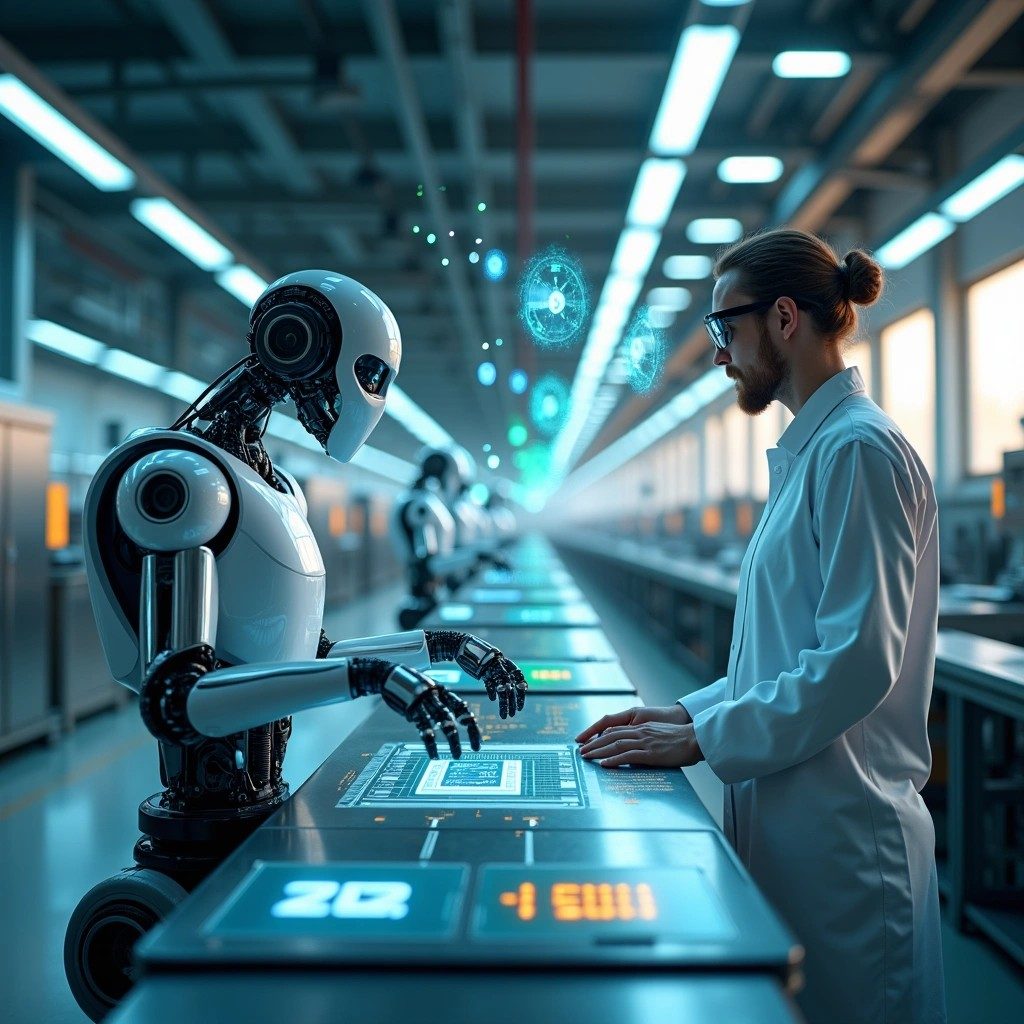
Artificial intelligence is transforming manufacturing operations at an unprecedented pace, with intelligent systems projected to become standard across production facilities by 2030. Factories worldwide are shifting from experimental pilots to full-scale AI deployment, reshaping every aspect of manufacturing — from autonomous robotics and predictive maintenance to data-driven decision-making. Specialised sectors, including Manchester precision engineering, CNC turning services and cylindrical grinding services, face significant operational changes as AI enhances precision and efficiency.
AI Adoption Accelerates Across Manufacturing
Manufacturing companies worldwide have progressed past initial AI exploration into substantive implementation. Recent survey data shows 57% of companies actively experiment with small-scale pilot projects, while 28% have successfully deployed operational AI projects. This signals a clear departure from tentative testing toward committed integration across production systems.
The AI-in-manufacturing market reached around USD 5.3 billion in 2024 and is projected to approach USD 48 billion by 2030. With that growth, 41% of manufacturers anticipate radical improvements in operations, efficiency and competitiveness, and a further 18% view AI as a fundamental game-changer for products, production methods and business structures — including specialised operations such as CNC machining company work and CNC turning services.
Intelligent Automation Reshapes Production
Industrial robots execute tasks with high precision and consistency, increasing production speed and reducing cycle times. Modern systems leverage advanced sensors — LiDAR, ultrasonic sensors and high-resolution cameras — to perceive their surroundings in remarkable detail, while AI algorithms enable robots to make real-time decisions and improve performance over time.
Robots operating continuously minimise idle time and maximise resource utilisation across Manchester precision engineering facilities. Collaborative robots work safely alongside human operators, enhancing efficiency while reducing fatigue and improving ergonomic conditions — and dangerous tasks can be assigned to machines, reducing workplace accident risk.
Predictive Maintenance Minimises Downtime
AI-driven predictive maintenance can reduce equipment downtime by up to 50% and lower maintenance costs by 10% to 40%. By analysing data from sensors, machine logs and other sources, AI detects patterns and anomalies that indicate potential equipment failures — allowing manufacturers to address issues before they escalate into costly breakdowns.
One global automotive manufacturer deployed an AI-powered system across its production lines and reduced downtime by 45%, leading to multi-million pound savings and a 12% increase in overall equipment effectiveness. Industrial IoT sensors monitoring vibration, temperature, pressure and energy consumption let AI build performance baselines and flag early warning signs long before failure.
AI-Powered Quality Assurance
AI systems equipped with computer vision analyse product images in real time, identifying defects invisible to the human eye. Traditional visual inspection methods miss up to 20% to 30% of defects, whereas AI can analyse hundreds of components per minute with constant, superior precision. This is particularly valuable in precision-critical processes such as cylindrical grinding services and keyway slotting, where tolerances are tight and consistency is essential.
Major manufacturers report defect rate reductions of around 30% within a year of deploying AI vision systems. Deep learning models continue to evolve by analysing inspection results over time, steadily reducing false positives and shifting quality control from reactive detection to predictive prevention.
Data-Driven Decision Making
Real-time analytics deliver immediate operational insight, reducing detection latency from hours to seconds and enabling production managers to act on live performance data rather than guesswork. AI integration has been shown to boost operational efficiency by around 18% while decreasing energy consumption by approximately 7% — meaningful gains for any CNC machining company focused on competitiveness and sustainability.
Generative AI is also accelerating product design, reducing development cycle times by upward of 70% and giving engineering teams more time to test and refine designs before production begins.
Workforce Evolution and Challenges
As routine tasks automate, AI creates new roles in system management, data analysis and maintenance, even as it displaces some traditional functions. Demand is surging for robotics maintenance specialists, AI system supervisors and data analysts — but a scarcity of professionals with AI and data-science expertise remains a real barrier. Forward-thinking manufacturers are responding with reskilling and upskilling programmes to close the gap.
Labour shortages are a significant driver of automation across Manchester precision engineering, CNC turning services and cylindrical grinding services, as companies seek to maintain productivity despite workforce constraints. Human oversight, however, remains essential to verify AI accuracy and act on its recommendations.
Overcoming Implementation Barriers
AI adoption isn't without hurdles. High initial investment costs, data security and privacy concerns, expanding regulatory compliance requirements, and the risk of over-dependence on AI all need careful management. Custom AI development can represent a substantial financial commitment, and manufacturers handling sensitive data and intellectual property must take cybersecurity seriously. The most successful organisations balance technological advancement with human-centred, ethical approaches.
What This Means for Manchester Manufacturers
The trajectory toward 2030 appears certain — intelligent systems are becoming standard rather than experimental. For smaller, agile firms, the opportunity lies in adopting the right technologies at the right scale, while retaining the personal service and flexibility that larger operations often can't match.
At Elmax Engineering Ltd in Stockport, we keep a close eye on these developments so our customers always benefit from reliable, high-quality manufacturing. If you've searched for CNC machining near me in Manchester, we combine modern CNC turning services, CNC milling service, cylindrical grinding services and keyway slotting with the responsive, personal service of a local engineering partner. Get in touch with our team to discuss your next project.