Top 10 CNC Machining Trends Shaping Manufacturing in 2026
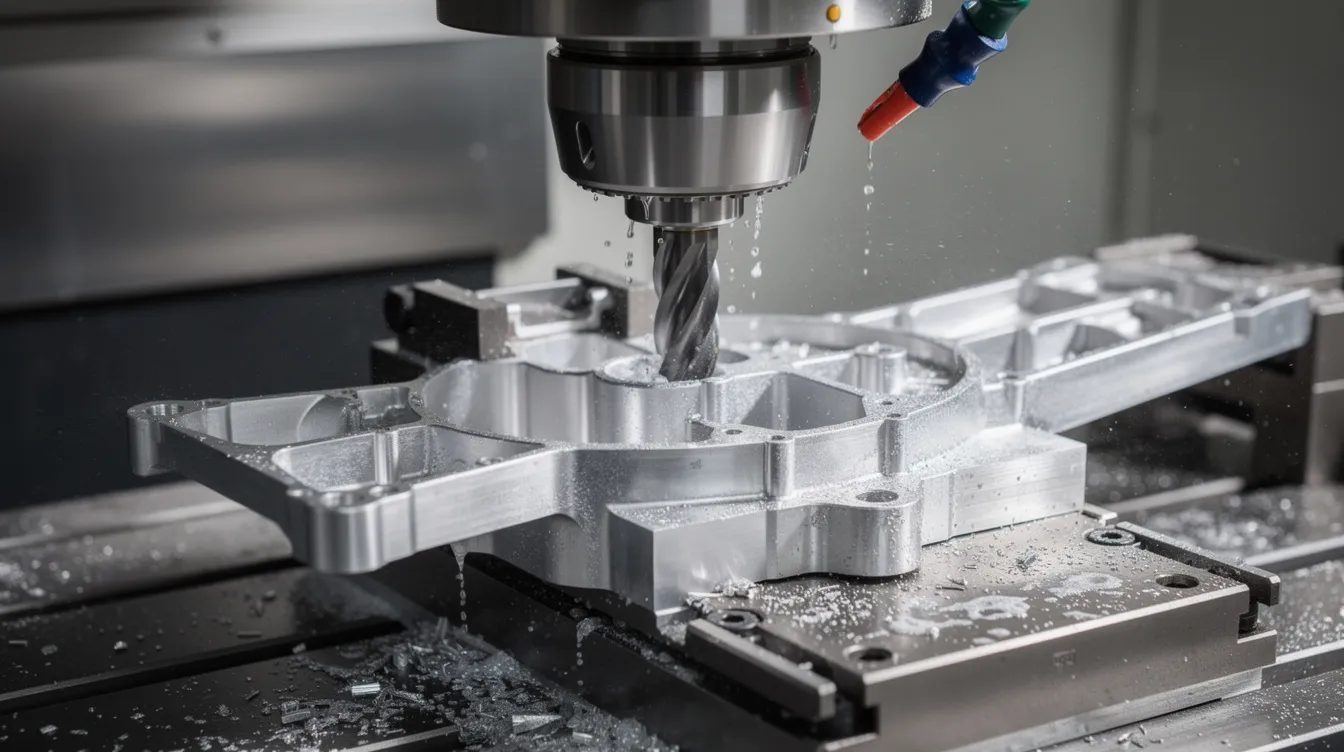
Manchester precision engineering has deep roots in aerospace and automotive manufacturing, and the city remains a major hub for subcontract CNC machining firms serving industries across the UK. But the landscape is shifting fast. CNC machining now encompasses turning, milling and routing processes that look nothing like they did even five years ago, and firms that fail to adapt risk losing ground to those that do.
At Elmax Engineering Ltd, we work with industrial OEMs and businesses that need high precision components manufactured to tight deadlines. This article breaks down the ten trends we see reshaping CNC machining services in 2026, why they matter, and how small manufacturers in Greater Manchester can act on them.
How We Identified the Most Impactful CNC Trends
Not every trend deserves your attention. We evaluated each one against criteria that matter to UK manufacturers operating at our scale:
- Measurable ROI — does it reduce downtime, scrap or lead times by a quantifiable margin?
- Scalability — can a business with fewer than ten employees adopt it without enterprise-level budgets?
- Sector relevance — does it serve machinery, construction, automotive, aerospace, medical or industrial OEM supply chains?
- Integration ease — will it work with existing CNC machines, tooling and CAM software?
The UK precision machining market generated approximately USD 5.63 billion in 2025 and is forecast to reach USD 11.09 billion by 2033, growing at a CAGR of around 8.9%. CNC operation is the largest and fastest-growing revenue segment. As a CNC machining company offering high-quality assurance with an experienced engineering team, Manchester firms are well positioned to capture that growth.
Top 10 CNC Machining Trends Transforming Manufacturing in 2026
1. AI-Driven Predictive Maintenance Systems
Predictive maintenance uses sensor arrays and machine learning models to monitor vibration, temperature and acoustics in real time, flagging failures before they happen.
- Why it stands out: UK deployments show 8–12% reductions in unplanned downtime within 90 days, with maintenance cost savings of 10–20% over the longer term.
- Best for: Small manufacturers with limited maintenance budgets who cannot afford unplanned stoppages.
- Key strengths: Real-time monitoring, cost savings, improved reliability and consistent efficiency across production schedules.
- Possible limitations: Initial sensor and gateway costs; a tuning phase where false positives can run around 15%; operator buy-in during the learning curve.
Local engineers use advanced machining tools to minimise human error, and predictive maintenance extends that principle to the machines themselves — limiting human error and reducing raw material wastage.
2. Cloud-Based Manufacturing Execution Systems
Cloud-native MES and MRP platforms replace whiteboards and spreadsheets with real-time machine status dashboards, scrap analytics and production tracking.
- Why it stands out: Enables remote monitoring and production optimisation across shifts and sites.
- Best for: Companies serving multiple industrial clients across UK regions who need visibility into every stage of the manufacturing process.
- Key strengths: Scalability, data accessibility, support for fast turnaround quoting and real-time production tracking.
- Possible limitations: Internet dependency and data security concerns for sensitive CAD files and customer data.
Manchester engineers manage the entire product lifecycle from prototyping to manufacturing, and cloud MES tools make that lifecycle visible in real time, with quality assurance inspections logged digitally at multiple stages.
3. Advanced Multi-Axis Machining Integration
5-axis CNC machines can perform complex multi-axis operations that would otherwise require multiple setups, and adoption in Manchester's manufacturing sector continues to accelerate.
- Why it stands out: 5-axis machining produces complex geometries in a single operation, and cycle time reductions of 25–40% are common on parts with compound features.
- Best for: Aerospace and automotive component manufacturers needing intricate geometries.
- Key strengths: Reduced setup times, improved accuracy and the ability to produce complex components with dimensional accuracy.
- Possible limitations: Higher equipment costs and skilled operator requirements for CAM programming.
CNC machining can produce components with tolerances of ±0.01 mm. Our CNC milling service uses rotary cutters to shape materials accurately, while our CNC turning services create cylindrical parts with high precision — handling components from 1 mm to 250 mm diameter. Where a turned diameter needs an exact running fit, our cylindrical grinding services finish it to the final few microns.
4. Sustainable Manufacturing Practices
Green manufacturing is no longer optional. Minimum quantity lubrication, coolant recycling, energy-efficient idle modes and scrap reduction programmes are becoming standard.
- Why it stands out: Meets environmental regulations and client sustainability demands, especially from aerospace and automotive sectors.
- Best for: Companies targeting environmentally conscious industrial clients and those needing to report carbon per part.
- Key strengths: Reduced waste, energy efficiency and regulatory compliance. Precision engineering reduces material wastage and lowers material costs simultaneously.
- Possible limitations: Initial investment in retrofit or process redesign; some materials may see reduced tool life under dry or near-dry cutting.
5. Real-Time Quality Control Systems
In-process probing, vision systems and laser measurement now feed back directly to CNC controllers, correcting deviations during machining rather than catching them after.
- Why it stands out: Eliminates post-production quality issues and reduces scrap rates.
- Best for: Safety-critical component manufacturers in Greater Manchester producing parts for medical, defence or aerospace sectors.
- Key strengths: Supports zero-defect manufacturing goals, reduces inspection time and builds customer confidence.
- Possible limitations: Sensor integration complexity and ongoing calibration requirements.
Precision engineers typically deliver components with tight tolerances and intricate geometries, and real-time quality control makes that guarantee more reliable. ISO 9001:2015 ensures quality management standards across precision components manufacturing, while aerospace work also adheres to AS9100 accreditation.
6. Collaborative Manufacturing Networks
Supply chain disruptions have driven OEMs to seek shorter lead times and local accountability. Small fabricators are forming alliances to share overflow work, inspection resources and specialised capabilities.
- Why it stands out: Enables small manufacturers to compete for larger contracts without massive capital outlay.
- Best for: Stockport-area fabricators serving industrial OEM markets who need to expand production capacity rapidly.
- Key strengths: Expanded capacity, shared engineering expertise and risk distribution across a wide range of partners.
- Possible limitations: Coordination challenges and quality consistency across multiple sites.
Partnering with UK-based engineers helps build a more stable supply chain. Local collaboration reduces logistical complexity and shipping delays, and supports close collaboration for design adjustments and prototyping — important for the high-mix, low-volume orders that serve critical sectors including aerospace and nuclear.
7. Digital Twin Technology
Digital twins create virtual replicas of the machining process — geometry, toolpath, machine kinematics, thermal behaviour — continuously updated with real data.
- Why it stands out: Reduces prototyping costs, waste and time-to-market for custom parts.
- Best for: Custom fabricated metal component manufacturers handling development work and new product models.
- Key strengths: Process simulation, virtual testing and optimised toolpaths before cutting a single chip.
- Possible limitations: Software complexity and computational requirements that may challenge smaller operations.
CNC machining handles materials like aluminium and titanium, and digital twins allow engineers to simulate cuts in stainless steel, plastic or almost any material before committing to physical stock — increasingly expected validation in aerospace and automotive work.
8. Automated Material Handling Systems
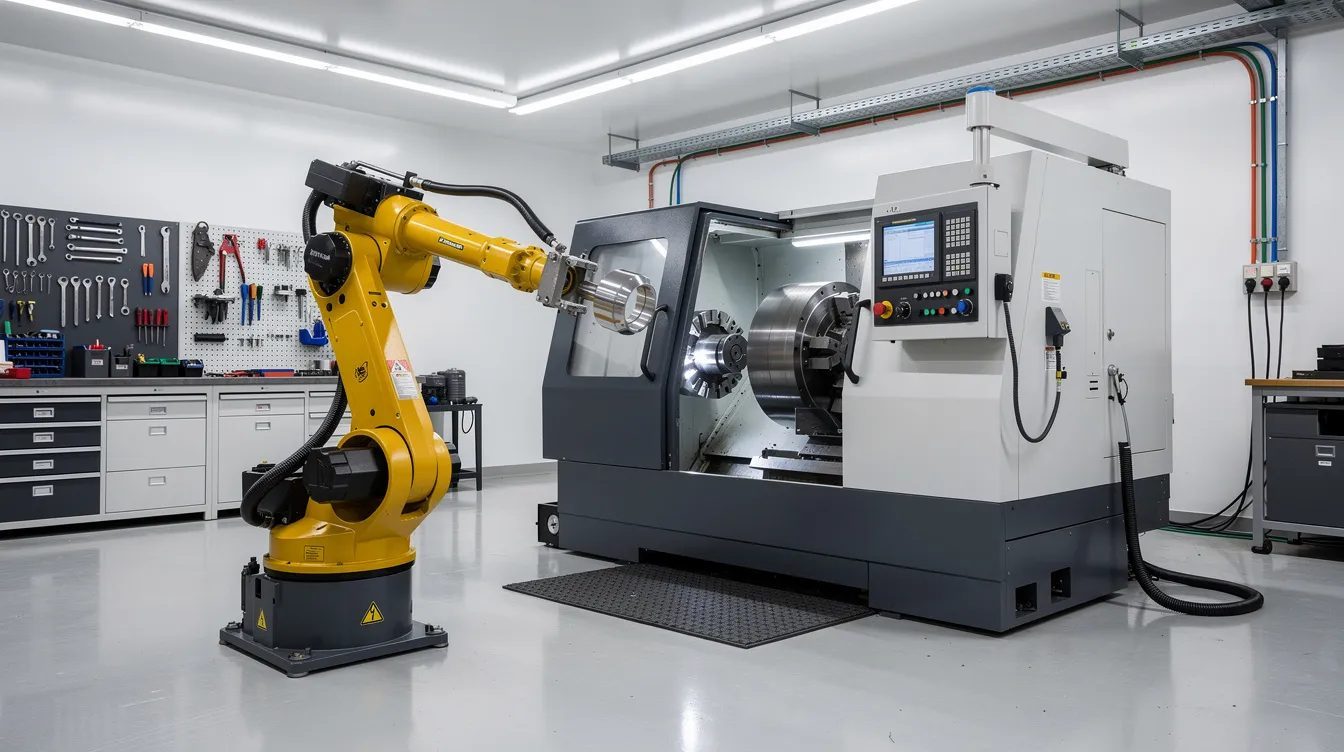
Robotic part loading, automated pallet changers and lights-out production are gaining traction even in smaller shops.
- Why it stands out: Robotic CNC machining can increase production output five-fold, maximising productivity with a limited workforce.
- Best for: High-volume repeat component manufacturers dealing with quantities that justify automation.
- Key strengths: 24/7 operation capability, consistent handling, reduced labour costs and the ability to meet tight deadlines.
- Possible limitations: Programming complexity and ongoing maintenance requirements for robotic solutions.
9. Flexible Manufacturing Cells
Modular production setups use palletised workstations and quick-change tooling to enable rapid changeover between different part types.
- Why it stands out: Enables a job shop to switch between creating custom parts for construction one hour and automotive assemblies the next.
- Best for: Job shops serving varied industrial sectors with diverse material requirements.
- Key strengths: Versatility, quick setup changes, efficient space utilisation and the ability to handle everything from CNC routing to heavy-duty milling. Components requiring drive features are finished with keyway slotting.
- Possible limitations: Initial configuration costs and operator training needs.
10. Edge Computing for Manufacturing
Edge computing places processing power on the shop floor rather than in the cloud, reducing latency for time-critical decisions.
- Why it stands out: Delivers near-instantaneous anomaly detection and process adjustment without depending on internet connectivity.
- Best for: Precision manufacturers requiring immediate process adjustments to maintain the highest standards of accuracy.
- Key strengths: Fast processing, reduced bandwidth needs and improved reliability — catching deviations in milliseconds.
- Possible limitations: Hardware investment and the technical expertise needed to deploy and maintain edge ML models.
Quick Comparison of Manufacturing Trends Impact
| Trend | Best For |
|---|---|
| AI Predictive Maintenance | Reducing unexpected downtime costs |
| Cloud MES | Remote production monitoring and optimisation |
| Multi-Axis Integration | Complex aerospace and automotive components |
| Sustainable Practices | Environmental compliance and client demands |
| Real-Time Quality Control | Safety-critical component manufacturing |
| Manufacturing Networks | Expanding capacity without major investment |
| Digital Twin Technology | Reducing prototyping costs and time |
| Automated Material Handling | Maximising productivity with limited staff |
| Flexible Manufacturing Cells | Diverse product mix operations |
| Edge Computing | Real-time process optimisation needs |
How to Choose the Right Trends for Your Manchester Manufacturing Operation
Choose Based on Current Production Volume
High-volume operations benefit most from automation and predictive maintenance — the ROI compounds with every additional cycle. Low-to-medium volume operations, like many in Greater Manchester, should prioritise flexibility and quality systems first. A flexible manufacturing cell pays back faster than a robotic loader when you are running ten different part numbers per week.
Choose Based on Customer Industry Requirements
Aerospace and automotive clients prioritise quality, traceability and meticulous attention to detail — invest in real-time quality control and accreditation. Construction and machinery sectors value cost-effectiveness and delivery reliability, making cloud MES and collaborative networks stronger plays. The sectors you serve should dictate the solutions you adopt.
Choose Based on Available Investment Capital
Not every trend demands six-figure capex. Predictive maintenance sensors, cloud MES subscriptions and edge computing gateways can be adopted for modest monthly costs. Larger investments like 5-axis machines or full automation cells should follow a phased implementation strategy, justified by confirmed contract demand or clear efficiency gains.
Final Thoughts
These ten trends are reshaping the landscape for Manchester precision engineering firms of every size. The manufacturers who will thrive are not necessarily those with the largest budgets — they are the ones who match technology adoption to genuine business need with meticulous attention to ROI.
At Elmax Engineering Ltd, we specialise in CNC turning and milling, cylindrical grinding and fabrication of precision metal components from our Stockport facility. We are equipped to handle prototyping through to small-batch production with the speed and accuracy our clients expect. Whether your next project involves aluminium, titanium, stainless steel or specialist alloys, our engineering expertise and commitment to high-quality results mean we deliver to the highest standards — on time and to specification.
Searching for CNC machining near me in Manchester or Stockport? If you are exploring how any of these trends could support your manufacturing goals, get in touch — we are always happy to discuss how we can help you produce the components your business needs.