CNC Machining vs 3D Printing: Precision Engineering in Manchester
Choosing between CNC machining and 3D printing affects everything from part strength to unit cost. Here's what manufacturers in Greater Manchester need to know before committing to either production process.
Fast Answer: When to Choose CNC Machining vs 3D Printing
Elmax Engineering Ltd, based in Stockport, Greater Manchester, specialises in Manchester precision engineering, CNC machining and fabricated metal components. We recommend our CNC milling service and CNC turning services for high-strength, tight-tolerance production parts, and 3D printing primarily for rapid plastic prototypes and early-stage design validation.
- Strength: Machined metals deliver full material properties. 3D printed plastics are significantly weaker, and metal additive parts often contain porosity.
- Tolerances: CNC machining can achieve tolerances of 0.02mm on critical features. FDM printing manages roughly ±0.3mm; even metal AM sits at ±0.05–0.1mm.
- Materials: CNC machining can use over 50 metal and plastic materials, including aluminium, stainless steel and titanium. 3D printing excels in resins and thermoplastics.
- Surface finish: Machined surfaces achieve smooth Ra 0.8–3 µm finishes. 3D prints typically require post-processing.
- Lead times: CNC machining can produce parts in 1–3 days for straightforward components. Plastic 3D prints can be ready in hours.
- Cost: 3D printing is often cheaper for 1–5 complex plastic prototypes. CNC becomes more cost-effective as volumes grow or when high-quality metal components are required.
What Is CNC Machining?
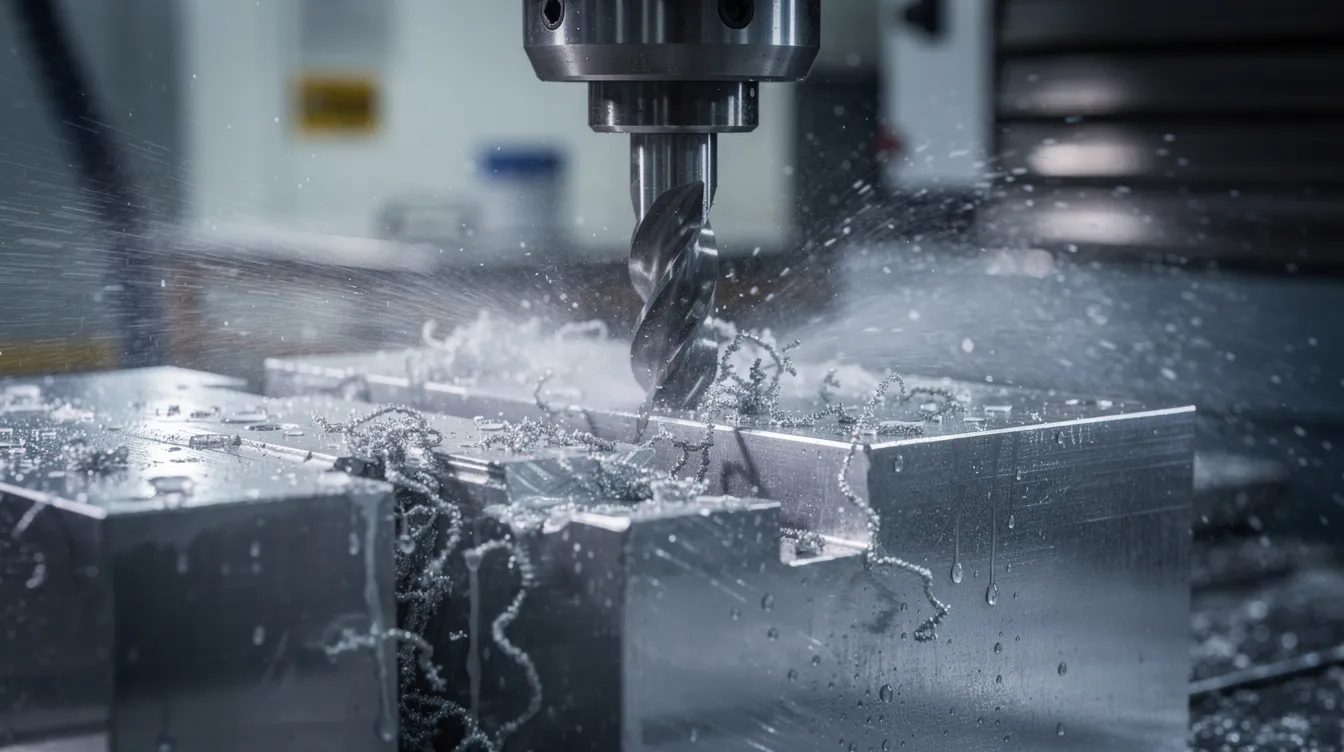
CNC machining is a subtractive manufacturing method where computer-controlled processes remove material from a solid workpiece with high accuracy. Key processes in precision engineering include CNC milling and turning, run on configurations from standard 3-axis setups to 5-axis machines that perform complex multi-axis operations in a single setup. As a CNC machining company in Stockport, our capability spans both.
High accuracy in precision engineering is measured in microns, and firms use advanced techniques like laser calibration to eliminate errors. CNC machining tolerances can reach as precise as ±0.02mm — far tighter than most 3D printing processes. Where even closer tolerances are required, our cylindrical grinding services finish components to ±0.005mm or better.
- Aluminium is a common material for CNC machining, alongside mild steel S275/S355 and stainless steel 304/316. Specialised materials like titanium and advanced alloys are also used.
- CNC machining can produce components from 1mm to 250mm diameter, covering everything from small pins to large plates.
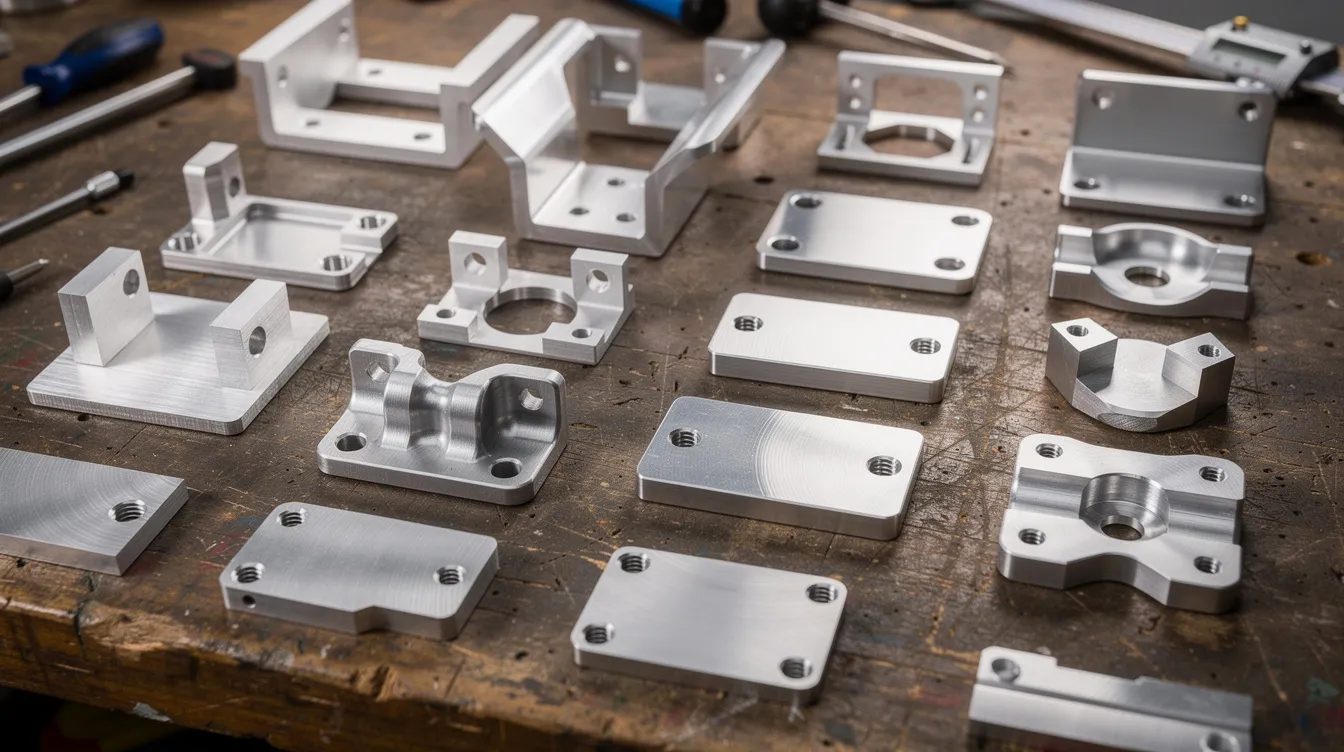
- In the Manchester and Stockport area, CNC machining is widely used for machinery parts, construction fixings, brackets and bespoke assemblies requiring repeatable high precision.
What Is 3D Printing?
3D printing is additive manufacturing that builds parts layer by layer from a digital model — the opposite of CNC's subtractive approach. The main technologies relevant to engineering buyers include FDM (plastic filament), SLA/DLP (resins) and SLM/DMLS (metal powder bed fusion).
- FDM tolerances sit around ±0.3mm with rough surfaces. SLA achieves finer detail but resins are often brittle.
- Metal AM can reach ±0.05–0.1mm, but surfaces are rough and critical features typically need post-machining.
- Elmax Engineering does not offer in-house 3D printing, but we frequently work with customers who prototype via 3D printing and then move into metal CNC machining for production parts.
Key Differences That Matter to Manufacturers
For engineers and buyers in Manchester choosing between processes, here are the differences that actually drive decisions:
- Material range: CNC machining can use over 50 different materials including metals and engineering plastics. 3D printing covers a narrower range of functional metals.
- Mechanical strength: Machined parts retain full wrought material properties. Additive parts exhibit anisotropy and potential internal defects.
- Repeatability: CNC machining produces thousands of identical parts with consistency. High-speed machining can increase output five-fold compared with conventional methods.
- Design complexity: 3D printing handles internal channels and organic shapes well. However, 5-axis machines perform complex operations that reduce setups and eliminate the support structures additive builds require.
- Part size: CNC and sheet metal fabrication handle large plates and frames. 3D printing is constrained by build volumes, especially for metal.
For safety-critical or load-bearing industrial applications — metal brackets in a Stockport factory, for instance — CNC machining remains the preferred precision engineering solution. Components needing drive features such as keyways are finished with our dedicated keyway slotting service.
Applications: When CNC Machining Wins, When 3D Printing Wins
Most projects in fabricated metal products across Greater Manchester use CNC machining for final high-quality components, supporting demanding sectors such as aerospace, automotive and medical.
- CNC wins: Custom steel brackets for Trafford Park machinery, aluminium control plates for construction equipment, stainless fittings for process lines, and small-to-medium batch production runs for OEMs.
- 3D printing wins: Ergonomic plastic prototypes, concept housings for electronics, visual mock-ups for client approval, and parts with complex internal channels.
- Hybrid workflow: Clients 3D print in plastic during early design, then bring CAD models to Elmax Engineering for CNC machining of durable metal versions.
Cost, Lead Times and Volumes
Many Manchester buyers choose between processes based on budget, deadlines and batch size. CNC machining can handle production volumes from 1 to 100,000 parts, with setup and programming cost spreading across larger runs to reduce unit price. 3D printing maintains a relatively flat per-part cost regardless of volume.
- Elmax Engineering turns around straightforward brackets and plates in a few working days for local clients.
- For repeat orders, CNC machining delivers better long-term value and more consistent quality than ad-hoc 3D prints from multiple suppliers.
- Simplifying geometry for 3-axis or 5-axis machining can significantly cut cycle time and cost compared with shapes optimised purely for additive manufacturing.
Design Considerations
Choosing your production process early avoids expensive redesigns later. Designing for CNC machining differs fundamentally from designing for additive.
- CNC-friendly design: Consistent wall thicknesses, accessible features for cutting tools, filleted internal corners, realistic tolerances, and avoidance of deep narrow pockets.
- 3D-print-friendly design: Lattice structures, internal channels, organic shapes and integrated assemblies.
- Elmax Engineering can review customer CAD models (STEP/DXF) and suggest modifications to make parts easier to machine or fabricate from sheet metal in our Stockport workshop.
Why Elmax Engineering Backs CNC Machining
Elmax Engineering Ltd is a small, agile Manchester precision engineering and fabricated metal products manufacturer in Stockport, serving customers across Greater Manchester and the wider UK. Our team offers direct engineer access, fast decision-making and flexible lead times that larger companies cannot match.
- We follow robust internal quality control procedures with calibrated measuring equipment, maintaining standards our clients depend on.
- We are equipped to deliver bespoke metal fabrication — brackets, plates, assemblies — for low-to-medium production runs using software-driven CNC programming.
- While 3D printing is valuable for concept work, our investment and decades of combined experience are rooted in CNC machining and metal fabrication, making us a long-term partner for production parts.
How to Choose the Right Process
The decision between CNC machining and 3D printing should be based on function, environment, quantity and budget — not novelty or the lowest initial quote.
- If your part is structural, metal and needed in dozens or hundreds, start with CNC machining. If it's a quick visual check, consider 3D printing first.
- Contact Elmax Engineering early in the design phase to discuss manufacturability, material choice and achievable tolerances across our full range of services.
- We offer CNC milling service, CNC turning services and fabricated metal components for machinery builders, construction contractors and engineering firms across the North West.
Searching for CNC machining near me in Manchester or Stockport? Send your drawings, CAD files, or even a 3D-printed prototype to our team for a fast, practical quote. We'll give you a process-agnostic recommendation grounded in real CNC machining expertise — reach out to Elmax Engineering today.