CNC Turning Explained
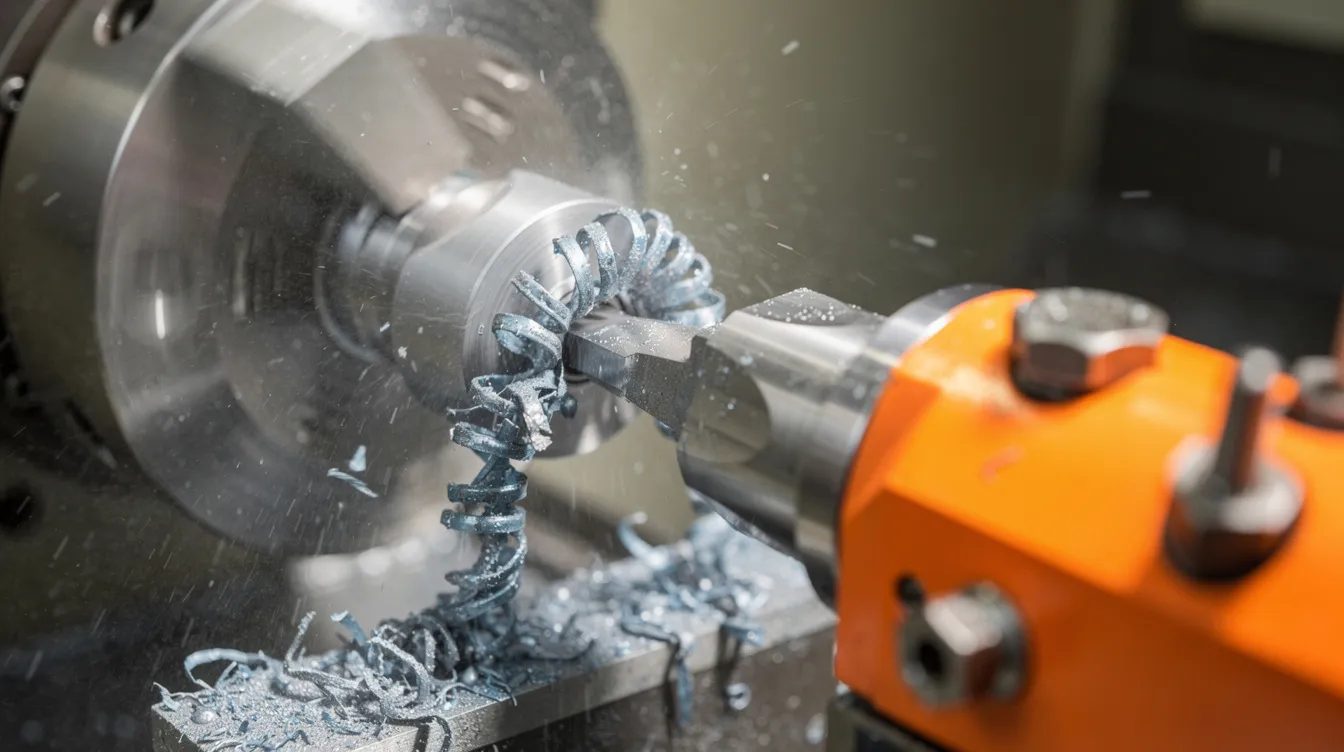
CNC turning is a precision manufacturing process that transforms raw cylindrical stock into finished components using computer-controlled cutting tools. For manufacturers across Greater Manchester and Stockport, it underpins supply chains spanning food production machinery, medical device subassemblies, construction fittings and automotive assemblies. Manchester is a key hub in the precision engineering sector, with a sophisticated network of CNC machining firms implementing Industry 4.0 technologies for efficiency.
Elmax Engineering Ltd is a Manchester precision engineering company based in Stockport. Founded in 2003, we serve industries like food, medical and automotive, handling orders from one-off prototypes to large-scale production. This article explains the CNC turning process, our capabilities, the materials we work with, finishing options and quality assurance practices. The core benefits of CNC turning come down to three things: dimensional accuracy that stays consistent across entire batches, predictable and repeatable results thanks to automation, and shorter lead times driven by robust process control and fast setup.
What Is CNC Turning?
CNC turning is a subtractive manufacturing process where a rotating bar or billet is machined by computer-controlled cutting tools to produce rotationally symmetric components. The workpiece spins in a spindle while stationary tools move along different axes to remove material and achieve the desired shape. CNC stands for computer numerical control — the machines operate using pre-programmed software and G-code that drives every movement, feed rate and tool change with exact precision.
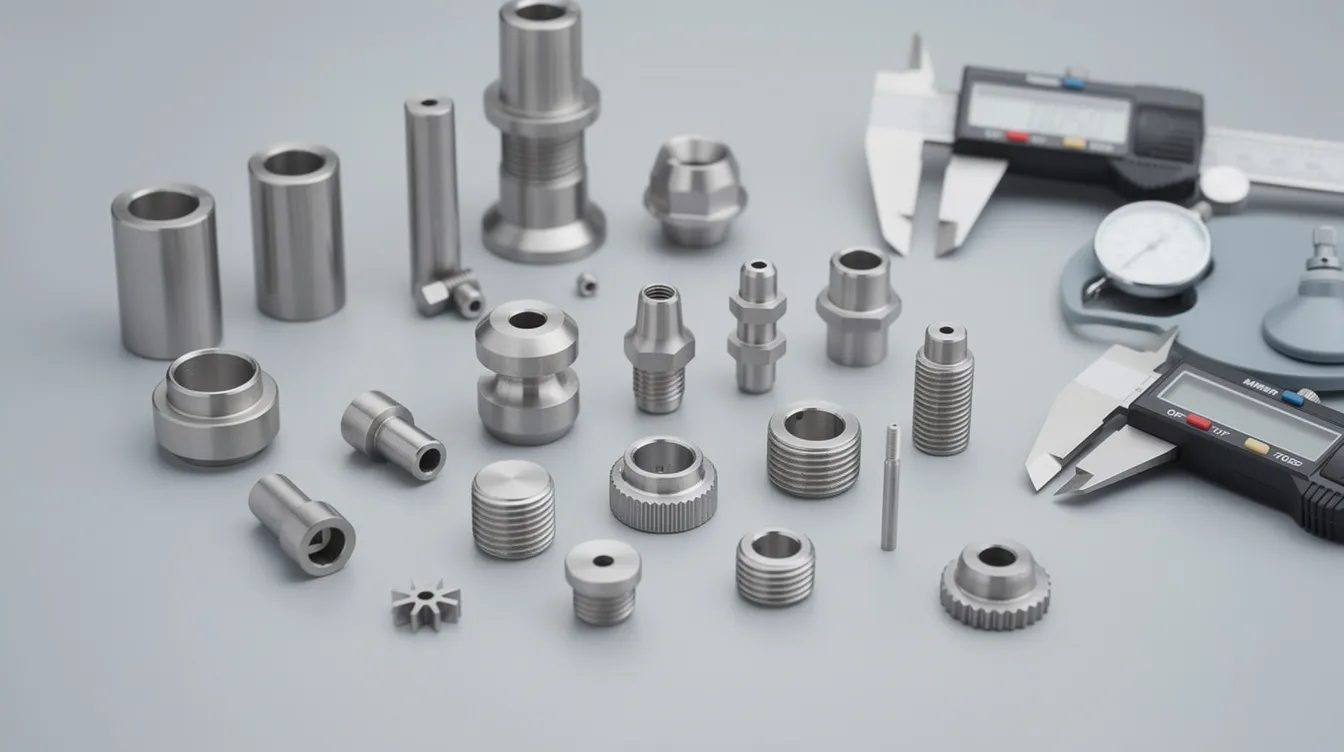
Common turned parts include shafts, pins, bushes, threaded connectors, fasteners and precision medical components. Unlike manual lathe work, where a skilled operator must intervene for every tool change and measurement, CNC technology allows machines to run unattended once programmed — delivering far greater consistency and throughput across entire batches with minimal human intervention. Our CNC turning services are built around exactly this capability.
CNC Turning vs CNC Milling
The core difference is straightforward: in turning, the workpiece rotates and the tool moves linearly, while in CNC milling service the tool rotates and the workpiece stays fixed. Components suited to turning include stainless steel shafts for food processing lines, brass fittings for hydraulic systems and medical device housings. Parts better suited to milling include mounting brackets, plates with pockets and complex prismatic housings requiring multiple planes.
Elmax Engineering offers both CNC turning and CNC milling in-house, often combining the two for complex projects. Mill-turn centres act as hybrid machines that perform both operations in a single setup, reducing handling time and improving alignment. Whether a part needs turning, milling or both, having everything under one roof simplifies logistics and keeps quality consistent.
- Turning: rotational parts, high concentricity, smooth cylindrical finishes
- Milling: complex 3D shapes, flat surfaces, pockets, slots
- Tolerances: turning often achieves ±0.01mm or tighter; milling comparable on critical features
- Geometries: turning handles OD/ID features, grooves, threads; milling handles non-round and multi-plane features
How a CNC Turning Machine Works
A modern CNC lathe consists of a headstock housing the spindle and chuck, a turret carrying multiple toolholders, and a control panel running the program. A tailstock or sub-spindle may support longer workpieces or perform secondary operations. Bar feeders automatically supply stock for repeat runs, while billets can be loaded manually.
The spindle rotates the workpiece, and tools in the turret are indexed automatically as the program sequences through operations. Coolant systems direct fluid at the cutting zone to control heat, flush away chips and prolong tool life. Chip evacuation is especially critical with stainless steel, which produces long stringy chips, and engineering plastics, which can melt or smear without proper cooling. Elmax runs modern CNC lathes in our Stockport facility and routinely holds tight tolerances on small to medium-size components.
The CNC Turning Workflow at Elmax
Our end-to-end production process runs through six stages:
- Enquiry: you send drawings, CAD files or legacy prints specifying material, finish, tolerances and quantities. We return a feasibility assessment and cost estimate.
- Design review: our engineers assess the part for manufacturability, suggesting modifications to wall thickness, corner radii or tolerances to reduce cost and improve machinability.
- Programming: using CAM software, we generate optimised toolpaths from your CAD data and output G-code for the machine.
- Setup: raw stock is loaded, tools mounted and offsets measured, fixtures set. Bar-feed alignments are checked for production runs.
- Machining: the program executes roughing and finishing passes, threading, boring, grooving and parting. Coolant and chip control manage heat and waste throughout.
- Inspection and delivery: parts are measured with calibrated equipment, documentation prepared, and finished parts cleaned, packaged and dispatched.
We support customers with full 3D CAD models as well as those with only 2D drawings. Flexible scheduling means we can respond to urgent breakdown components on tight deadlines alongside repeat production runs.
Typical CNC Turning Operations
A single CNC turning cycle often combines multiple cutting operations to create a finished part in one setup. Key operations include turning and facing (reducing external diameters and creating flat datum faces), boring (enlarging internal diameters to precise dimensions), grooving (cutting recesses such as O-ring seats), threading (internal or external threads in metric, BSP or UN forms), parting-off (severing the finished part from bar stock), and drilling and reaming (creating and finishing axial holes to tolerance).
Combining these operations in one setup reduces handling and improves accuracy — especially important for tight-tolerance medical devices or automotive parts. Our CNC lathes can also perform basic milling operations like flats and key features where appropriate, or we transfer to CNC milling centres for more complex features.
CNC Turning Capabilities at Elmax
Our Stockport facility delivers the following capabilities, making us a well-suited CNC machining company for components across multiple sectors:
- Maximum diameter: up to 300mm OD
- Maximum length between centres: up to 600mm
- Bar-feed capacity: up to 65mm diameter
- Standard tolerances: ±0.01mm on critical diameters, tighter on request depending on geometry
- Batch sizes: one-off functional prototypes, pre-production samples and scheduled production for OEM customers
- Complementary services: cylindrical grinding services for ultra-fine diametrical tolerances, and keyway slotting for torque-transmitting features
Materials We Turn
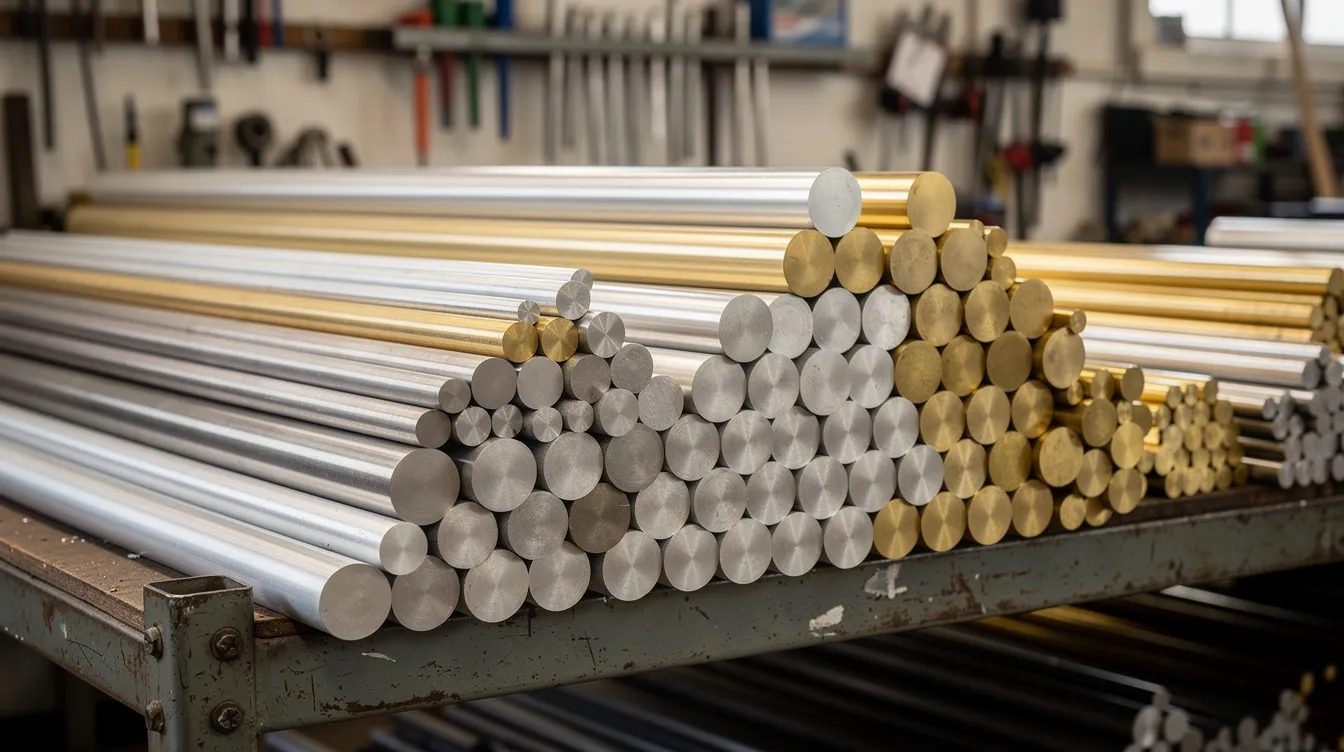
Elmax machines a wide range of metals and engineering plastics, sourcing certified material with full traceability where required for regulated sectors like medical devices.
| Material Category | Common Grades | Typical Applications |
|---|---|---|
| Mild and carbon steel | 1018, 1045 | Construction fixings, structural parts |
| Stainless steel | 303, 304, 316 | Food equipment, medical instruments |
| Aluminium alloys | 6082, 7075, 6061 | Lightweight fixtures, housings |
| Brass and bronze | CZ121, PB102 | Threaded connectors, hydraulic fittings |
| Engineering plastics | Acetal (POM), nylon, PTFE | Low-friction bushes, chemical-resistant parts |
Aluminium 6061 machines roughly 2.5× faster than baseline steel, while stainless 304 machines more slowly at around 45% of that baseline — differences that directly affect cycle time and cost.
Turned Parts for Key Industries
- Food and beverage: stainless steel rollers, spacers and shafts for conveyor systems requiring hygienic finishes
- Medical: precision pins, housings and connectors where burr-free edges and traceability are essential
- Construction: threaded anchors, fixings and structural connectors in carbon steel or stainless
- Automotive and transport: bushes, shafts and spacers for automotive assemblies
- Aerospace: lightweight, high-strength components produced to demanding tolerances
Our primary customers are North West UK manufacturers, though we serve clients nationwide.
Surface Finishes and Post-Processing
Turned parts can be delivered in various surface conditions. An "as turned" finish, typically Ra 0.8–3.2µm, suits internal mechanical parts and non-cosmetic features. Post-turning options include grinding for tight-tolerance fits, bead blasting for a uniform matt appearance, powder coating for corrosion protection and colour, and anodising for aluminium components.
| Finish Type | Typical Thickness | Best For |
|---|---|---|
| As turned | N/A | Internal parts, non-cosmetic |
| Anodising Type II | 5–25µm | Corrosion resistance, colour, aesthetics |
| Anodising Type III (hard) | 25–100µm | Wear resistance, sliding surfaces |
| Powder coating | 60–120µm | Outdoor use, construction, colour coding |
| Grinding/polishing | N/A | Precision fits, bearing surfaces |
Type II anodising for aluminium produces coatings of 5–25µm with hardness around HV 200–300, offering moderate corrosion resistance and a wide choice of colours. Type III hard anodising builds 25–100µm at HV 400–600 for far better wear resistance, though colours are limited and designers must account for dimensional growth. Elmax coordinates all these finishes as part of a complete supply service, delivering parts fully finished and ready for assembly.
Quality Assurance and Inspection
Elmax follows quality procedures aligned to ISO 9001 standards. Our approach includes calibrated digital micrometers, bore gauges and surface-finish measurement equipment; in-process inspections at setup and during production; final dimensional checks before packaging; documentation including certificates of conformity and material certificates on request; and First Article Inspection Reports for new or safety-critical components.
A First Article Inspection Report (FAIR) is formal measurement documentation produced on the first part off a new tooling setup. OEMs and tier suppliers in automotive, medical and construction regularly request FAIRs to confirm dimensional accuracy before committing to full production. A typical FAIR includes the part number, drawing revision, each dimensioned feature checked, measured values, specified tolerances and any deviations. Typical triggers include new designs, design changes, material changes or new tooling setups.
Cylindrical Grinding and Keyway Slotting for Turned Parts
Cylindrical grinding complements CNC turning where ultra-tight diameter tolerances or very smooth surface finishes are needed, such as bearing journals and precision shafts — achieving surface finishes well below Ra 0.4µm to reduce friction in rotating assemblies. Keyway slotting cuts key slots into turned shafts and hubs to transmit torque via keys. Both services are available in-house at Elmax, reducing lead times compared with sub-contracting.
- Motor shaft keyways for drive assemblies
- Gear hub keyways for power transmission
- Pump shafts requiring both ground diameters and keyways
Benefits include maintained concentricity, fewer setups and single-source accountability.
CNC Turning Tolerances and Surface Finish
Tolerance defines the acceptable deviation from a nominal dimension. Tighter tolerances increase cost because they require more careful machining, slower feeds and additional inspection time. Typical ranges achievable on our equipment:
| Fit Type | Tolerance Range | Surface Finish (Ra) |
|---|---|---|
| General turned | ±0.02mm | 1.6–3.2µm |
| Precision diameters | ±0.01mm | 0.8–1.6µm |
| Ground bearing seats | ±0.005mm | 0.2–0.4µm |
Specify tight tolerances only on functionally critical features. Relaxing non-critical dimensions reduces cycle time and cost without impacting performance.
Design Tips for Turned Parts
- Avoid sharp internal corners; use fillet radii of at least 0.5mm to reduce tool stress and breakage risk
- Use standard thread forms (metric, BSP) rather than custom profiles
- Keep wall thickness uniform to prevent deflection during machining
- Avoid length-to-diameter ratios above 4:1 without support
- Provide generous chamfers on edges for easier assembly and safety
- Specify tolerances only where functionally necessary
- Consider how coatings will affect final dimensions
- Discuss part design with Elmax before production — we can review drawings and suggest cost-saving changes
Case Study: CNC Turned Shaft for a Manchester Food Manufacturer
Challenge: A Manchester food manufacturer experienced frequent conveyor downtime due to worn rollers that were out of tolerance and showing surface corrosion.
Solution: Elmax manufactured replacement shafts from 316L stainless steel, 45mm diameter by 380mm length, holding critical bearing-seat tolerances to ±0.005mm through CNC turning followed by cylindrical grinding. Surfaces were finished to Ra 0.4µm to reduce friction and resist bacterial harbourage.
Result: The new shafts delivered significantly improved reliability, reduced unplanned maintenance downtime and met food-safety hygiene requirements. The customer now orders repeat batches on a quarterly call-off schedule.
Frequently Asked Questions About CNC Turning
We have no minimum. We handle one-off prototypes through to production runs of thousands.
±0.01mm as standard on critical diameters, with ±0.005mm or tighter achievable through grinding.
We turn various types of steel, stainless steel, aluminium, brass, bronze, and engineering plastics like acetal, nylon and PTFE.
Yes. We can work from sketches, legacy prints or sample parts and create CAD models where needed.
Turning rotates the workpiece against a stationary tool to create cylindrical parts. Milling rotates the tool against a stationary workpiece to create flats, pockets and complex shapes.
Prototypes in days, production batches typically 2–4 weeks. We can operate on expedited timescales for urgent jobs.
Why Choose Elmax Engineering for CNC Turning
Elmax Engineering is owner-managed since 2003 with direct access to decision-makers, offering full in-house capability across CNC turning, CNC milling, cylindrical grinding and keyway slotting. We handle flexible batch sizes from single prototypes to ongoing scheduled production, with a Stockport location ideal for site visits, joint inspections and efficient delivery to North West UK customers.
CNC turning remains one of the most efficient ways to produce precise, repeatable turned parts. If you've been searching for CNC turning services or a wider CNC machining company near you in Manchester or Stockport, email us your drawings or CAD files, arrange a visit to our facility, or get in touch to discuss your requirements. We're also happy to review parts you currently source elsewhere to explore cost or quality improvements.