What Is Keyway Slotting and Why Is It Important?
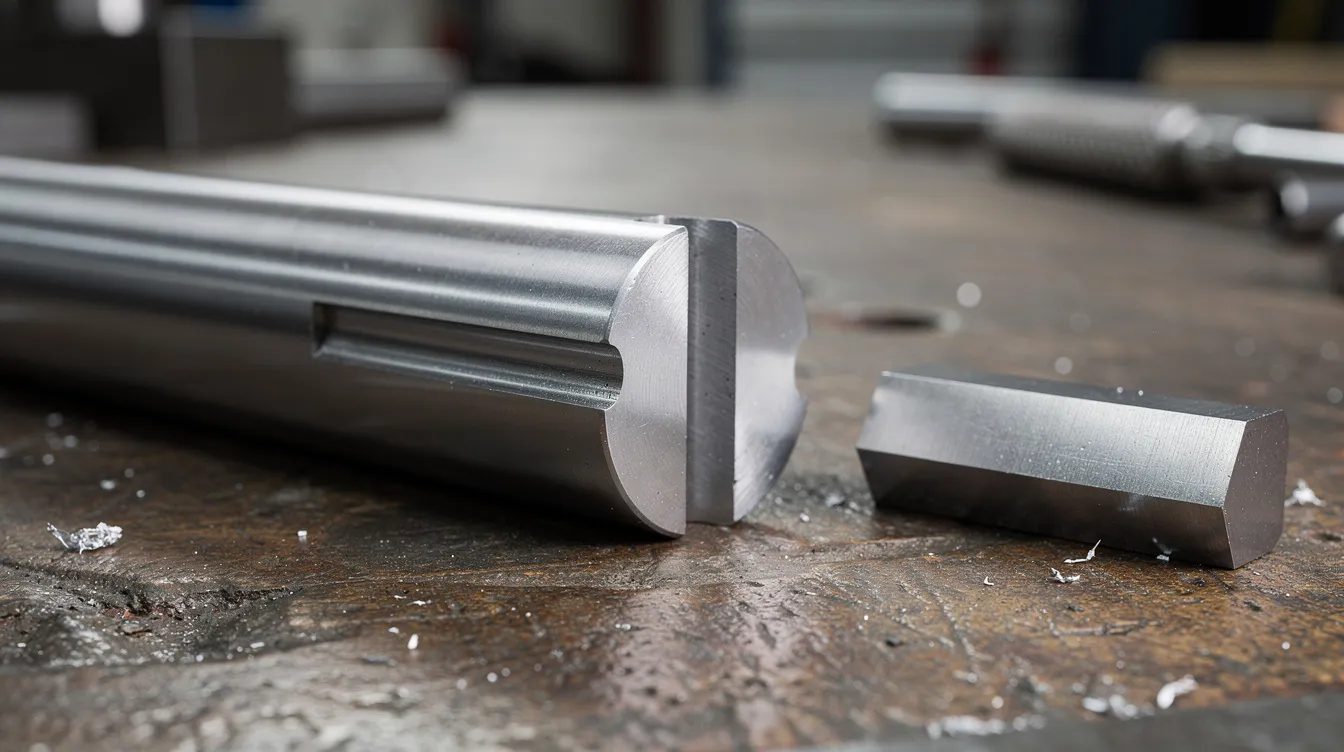
Keyway slotting is one of those machining operations that rarely gets the spotlight, yet it quietly holds rotating machinery together across virtually every industry. If you work with shafts, gears, pulleys or couplings, understanding this process can save you time, cost and unplanned downtime.
What Is Keyway Slotting?
Keyway slotting is the machining of a precise slot — inside a bore or along a shaft — that accepts a metal key to lock rotating components together and transmit torque. Without it, gears slip, pulleys spin freely, and drives fail.
Elmax Engineering Ltd, based in Stockport and founded in 2003, provides keyway slotting as a core service alongside CNC milling service, CNC turning services, cylindrical grinding services and wider CNC machining. The Manchester precision engineering sector supports industries from aerospace and automotive through to food, medical and construction — all of which depend on exactly this kind of capability.
In practice, keyway slots appear in gears, pulleys, sprockets, couplings and custom parts. Keyway slotting is typically performed after initial CNC machining operations to finalise fit and torque transmission, and we handle everything from prototypes to production orders.
How a Keyway Works in Mechanical Design
A keyed assembly has three elements working together:
- Shaft — the rotating member, precision turned to nominal diameter
- Hub — the mating part (gear, pulley, sprocket or coupling) that mounts over the shaft
- Key — a shaped metal block inserted into matching slots in both shaft and hub
The key sits in both keyways and bears against their side walls, transferring torque mechanically rather than relying on friction alone. High-precision components require tight tolerances for these features to mate correctly and perform reliably.
| Type | Shape | Typical Use |
|---|---|---|
| Parallel key | Rectangular | General industrial drives |
| Woodruff key | Semi-circular | Automotive, limited radial space |
| Spline | Multiple teeth | High torque, frequent removal |
Standard sizes follow BS 4235 and ISO equivalents. For example, a shaft diameter of 22–30mm takes an 8×7mm key with a shaft keyway depth of approximately 4.0mm. Elmax can also produce non-standard keyways for specialist requirements, including legacy machinery where original drawings no longer exist.
Keyway Slotting vs Broaching, EDM and CNC Milling
There are several ways to produce a keyway, and the right choice depends on volume, material and geometry.
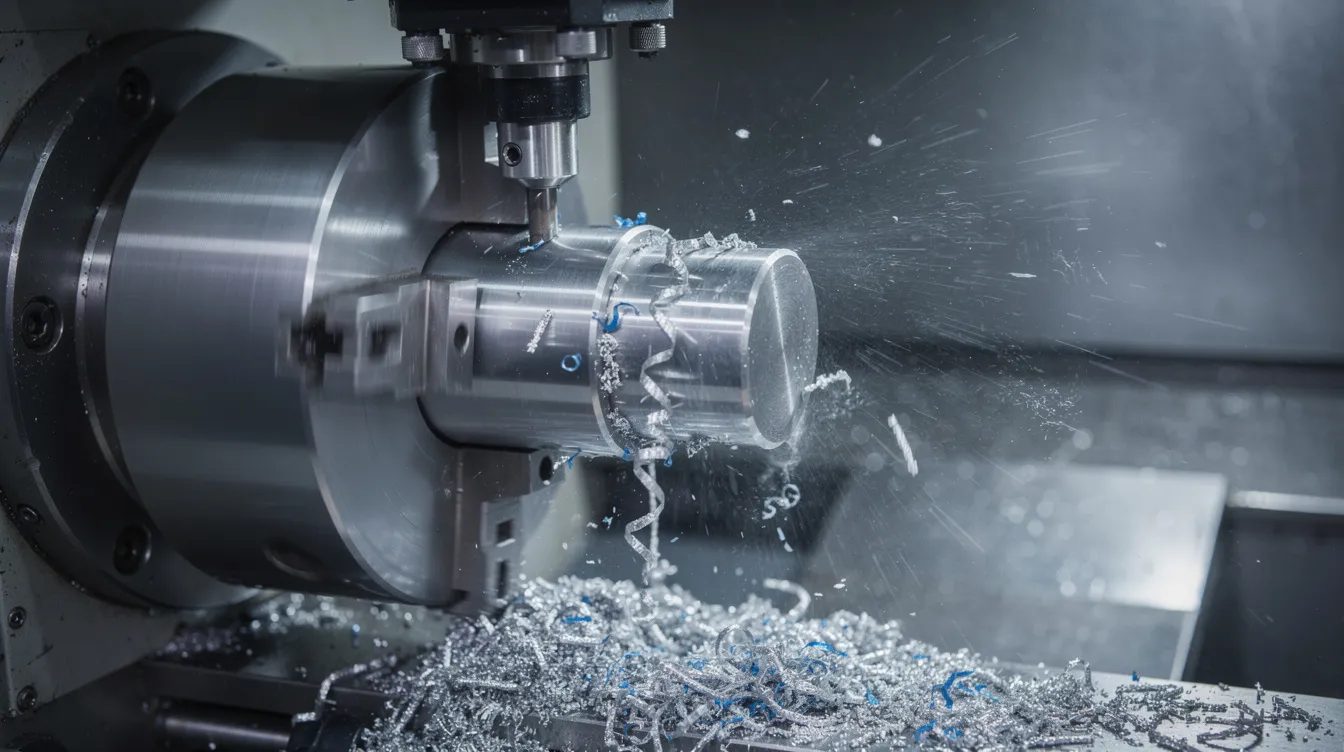
- Slotting — a reciprocating single-point cutter forms internal keyways. Ideal for one-off or small-batch work and bespoke bores. Low tooling cost, quick setup.
- Broaching — a multi-tooth tool is pushed through the bore. Faster for high volumes, but dedicated broach tools are expensive and inflexible for varied custom parts.
- CNC milling — suited to external keyways on shafts, or when the part is already fixtured on a machining centre. At Elmax, milling integrates directly with CNC turning on the same shop floor.
- Wire EDM — reserved for very hard materials or intricate profiles. Typically slower and more costly.
For many Manchester and North West manufacturers needing flexible, low-to-medium volume production, in-house keyway slotting provides the best balance of precision, cost and lead time.
Why Keyway Slotting Matters for Performance and Safety
Getting a keyway wrong doesn't just cause inconvenience — it can cause danger.
- Slip prevention — an accurate keyway prevents slippage between shaft and component, avoiding line stoppages and unexpected downtime.
- Safety — poor keyway alignment leads to vibration, premature bearing wear, or catastrophic failure in rotating machinery.
- Stress management — tight tolerances on width, depth and position reduce stress concentrations, preserving shaft and bearing life.
Consider the real-world stakes: a food processing conveyor where a slipped keyway traps debris and creates hygiene failures; a medical packaging line where even slight backlash compromises seal integrity; construction hoists using keyed pulleys that must not fail under load, where lives depend on reliability.
Our approach — including cylindrical grinding where needed — ensures concentricity between the keyway and bearing journals for smooth, safe running.
Materials and Typical Applications
CNC machining can produce keyed parts from almost any material. Common choices include:
- Mild steel (EN8 / 1045) — general industrial shafts and hubs
- Stainless steel (304, 316) — food, medical and pharmaceutical environments requiring corrosion resistance and regular washdowns
- Aluminium (6082, 7075) — lightweight assemblies, test rigs, prototyping
- Titanium — high-performance aerospace and nuclear applications
- Engineering plastics — low-load or weight-critical designs
In automotive work, keyed gears, sprockets and hubs are staples of driveline development. In construction and materials handling, keyways appear in conveyor drums, hoist pulleys, winch shafts, and couplings for cranes and lifting systems. We combine keyway slotting with turning, milling and drilling to deliver complete assemblies from prototype to batch production.
Our Keyway Slotting Capabilities
Elmax Engineering operates from a dedicated facility in Stockport, just south of Manchester, serving clients across the North West and UK since 2003. We specialise in handling everything from small precision shafts to larger industrial components under one roof.
- In-house keyway slotting for bores and shafts across a wide range of diameters
- CNC turning as part of a complete engineering service, handling both prototypes and production runs
- CNC milling for hubs, blocks and flanges, plus cylindrical grinding to achieve tight fits before cutting the keyway
- Support for customer drawings, 3D CAD models or samples, with reverse engineering where old components need replication
We handle one-off prototypes, repair parts and ongoing small-to-medium production runs, with quick setup for urgent breakdown work — meeting tight deadlines for customers in and around Manchester.
From Project to Finished Keyed Component
Here's what a typical project flow looks like:
- Design and quotation — you supply a CAD drawing, specify material and volume. We provide a detailed quote and lead time, with standard non-urgent turnaround typically 5–7 days.
- CNC turning — shafts are turned to near-net shape, producing components from 1mm to 250mm diameter using fixed and sliding-head lathes to hold the tolerances needed for accurate keyway placement.
- CNC milling — mating hubs and flanges are milled, ensuring datum surfaces are ready for slotting.
- Keyway slotting — the part is fixtured, datum surfaces located, and the keyway cut to the width, depth and position specified on the drawing.
- Secondary operations — deburring, cylindrical grinding, surface treatments or coatings arranged through approved suppliers.
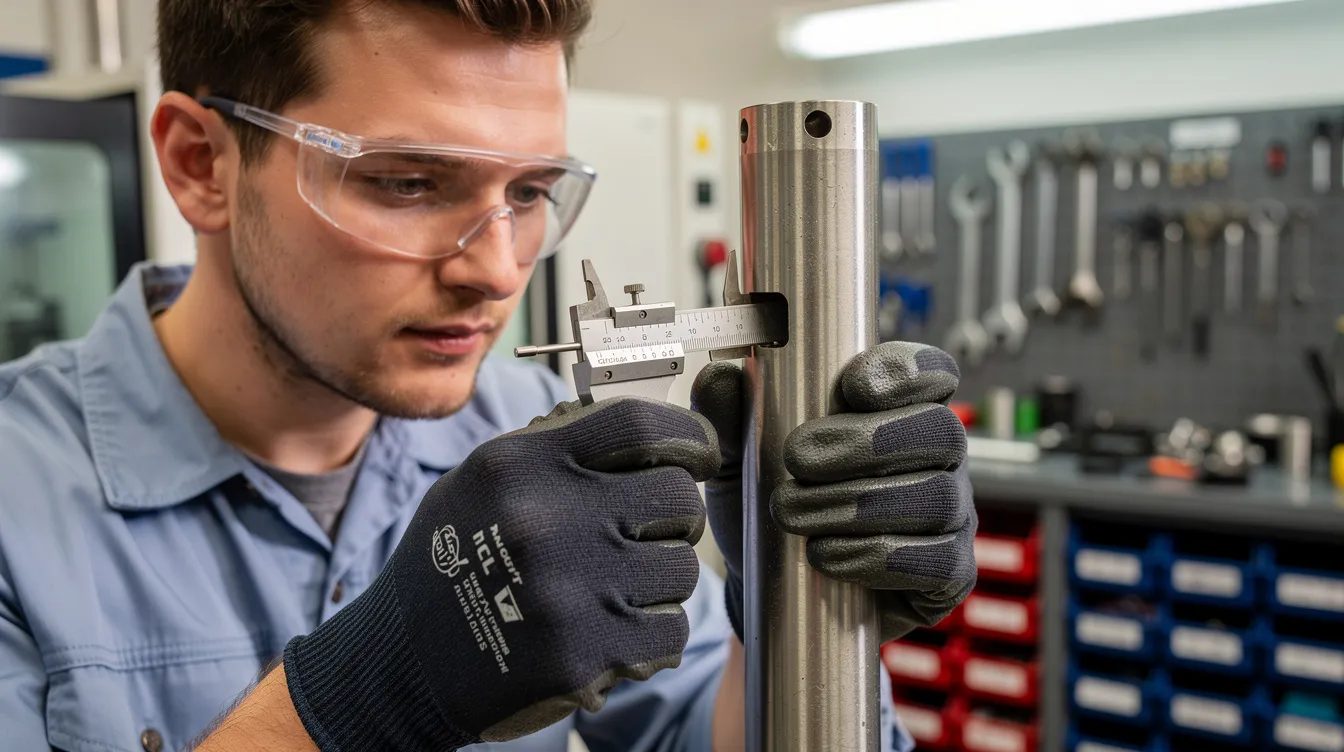
- Inspection and dispatch — dimensional checks including keyway width and run-out relative to bearing seats, then packaging and delivery.
Quality, Tolerances and Standards
Elmax works to tight tolerances appropriate to each application — typical keyway width tolerances in the ±0.01–0.02mm range, or as specified by the customer.
- Standards — BS 4235 and ISO metric key dimensions form the baseline; we can also produce non-standard sizes for legacy machinery.
- Inspection — calibrated gauges, micrometers, bore measurements, and keyway alignment checks relative to shaft features, with CMM inspection available for critical components.
- Certification — our processes align with ISO 9001 quality principles, with First Article Inspection reports available for new or safety-critical parts.
- Traceability — material certificates and documentation for food, medical, oil and gas, or nuclear applications.
Consistent quality in keyways reduces rework, extends component life and lowers total cost of ownership for OEMs and companies relying on precision assemblies.
When to Specify Keyway Slotting in Your Design
Keyways are the right solution when:
- Positive, repeatable torque transmission is needed and components may require removal or repositioning (e.g. timing of cams or pulleys)
- Loads reverse, vary, or operate under high torque — where interference fits or adhesives alone would be unreliable
- Regular maintenance or assembly and disassembly cycles are part of the design intent
Involve your manufacturer early to confirm feasible keyway dimensions, tolerances and material choices. For some high-speed or heavily loaded systems, splines or shrink fits might deliver better efficiency — and we can machine those features too. Include clear drawing details (keyway form, standards reference, tolerances, chamfers and surface finish) to avoid ambiguity at the machining stage.
Why Choose Elmax Engineering for Keyway Slotting
- Experience — over 20 years of Manchester precision engineering since 2003, supporting food, medical, construction, automotive and aerospace sectors
- All under one roof — CNC turning, CNC milling, cylindrical grinding and keyway slotting in-house, reducing handling, lead time and risk of misalignment between operations
- Responsive delivery — scheduled production and urgent breakdown work across Greater Manchester and the wider UK
- Engineering support — direct access to experienced engineers who understand real-world plant challenges, from design stage through to final assembly
- Flexibility — the capability to work with steel, stainless steel, aluminium, titanium, plastics and almost any material your project demands
Whether you need a one-off repair shaft or a batch of keyed assemblies at scale, the right keyway is non-negotiable. If you've been searching for a CNC machining company offering keyway slotting in Manchester or Stockport, send us your drawings or CAD files to discuss your next project — and see how efficient, accurate keyway slotting delivers the high-precision components your business needs.