Why Tolerances Matter in Precision Engineering
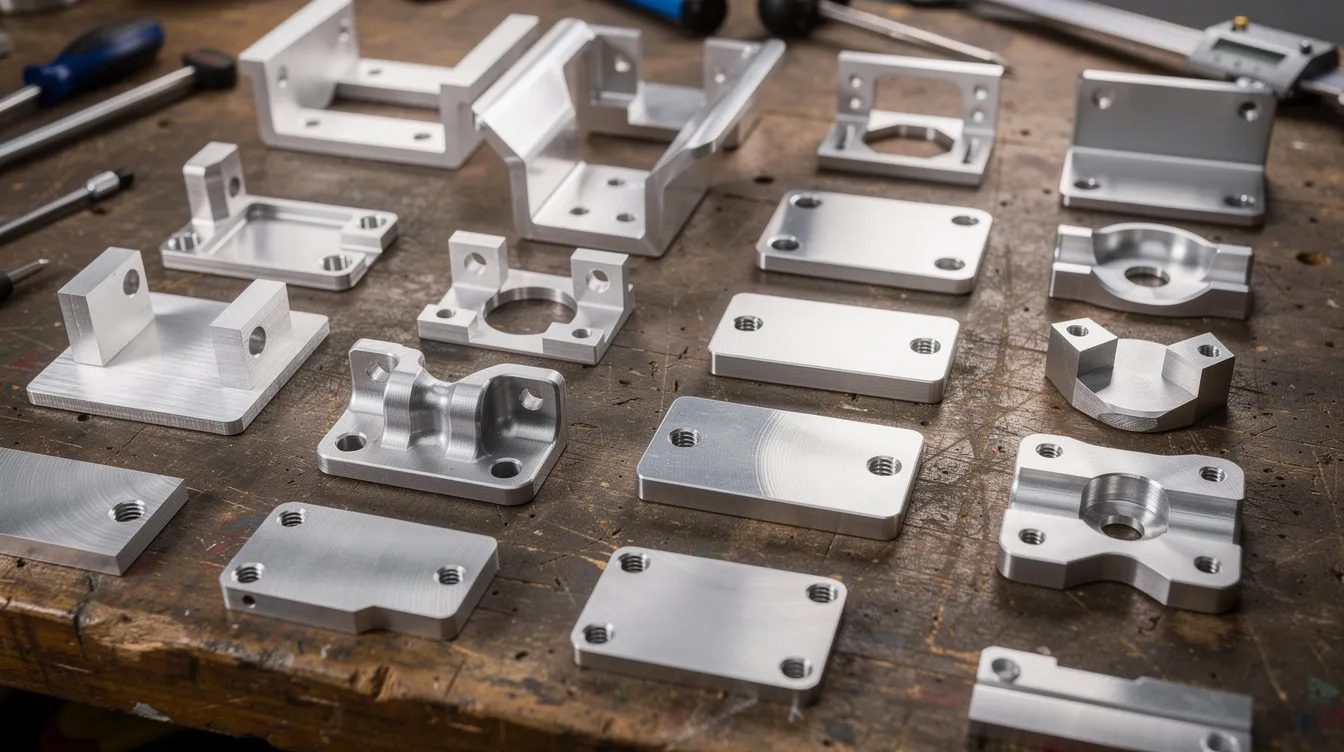
In precision engineering, a tolerance defines the allowable variation from a nominal dimension — the difference between a part that fits perfectly and one that fails in service. Every machined or fabricated metal component has tolerances, whether explicitly stated on a drawing or inherited from a general standard. Getting them right is non-negotiable for reliability, safety, and cost control.
At Elmax Engineering Ltd, based in Stockport and serving industrial clients across Greater Manchester and the wider UK, we see firsthand how tight tolerances and sensible tolerancing decisions underpin successful CNC machining, CNC milling service, CNC turning services, and broader machining work. Greater Manchester's engineering businesses employ over 110,000 people across 6,000-plus firms, making the region a core node of the UK's "Northern Powerhouse" and a localised ecosystem of manufacturing excellence.
This article explains why tolerances matter, how they affect cost and lead times, and how to make smarter tolerancing decisions on your next Manchester precision engineering project.
What Are Engineering Tolerances?
Engineering tolerances specify the acceptable range of variation from a part's ideal (nominal) dimensions. They are the language through which designers communicate precision requirements to the workshop floor. Without them, there's no objective way to verify fit, alignment, sealing performance, or assembly behaviour.
- Dimensional tolerances define allowable variation in linear measurements — lengths, widths, diameters. A shaft drawn at Ø25.000 mm ±0.02 mm, for example, must finish between 24.980 mm and 25.020 mm.
- Geometric tolerances (GD&T) control form, orientation, and location — flatness, perpendicularity, concentricity, run-out, and more. These are essential wherever assembly, motion, or sealing is involved.
- Standards in use: ISO 2768-1 and -2 define general tolerance classes (Fine, Medium, Coarse, Very Coarse) for dimensions where individual tolerances aren't stated. ISO 1101 and ASME Y14.5 govern geometric tolerancing.
- Drawing application: A general tolerance class (such as "ISO 2768-m") sits in the title block, while critical features — bearing seats, sealing surfaces, hole patterns — receive individual, tighter tolerances.
- Surface finish notes (Ra values) often accompany tolerances, because surface quality directly affects fit and function.
- Process coverage: CNC machining spans turning, milling, grinding, and EDM, and can process metals, plastics, and composites — each with its own achievable tolerance range.
Why Tolerances Matter in CNC Machining and Fabrication
Tolerances directly determine whether your custom parts perform as intended. A component that looks correct but falls outside its tolerance band can cause vibration, leakage, premature wear, or outright assembly failure. Precision engineering firms support high-value industries like aerospace and automotive, where the consequences of poor tolerancing range from costly rework to safety incidents.
Manchester precision engineering serves high-tech sectors including aerospace, medical, and defence, and benefits from a dense, high-value supply chain — which means tolerance failures ripple quickly through interconnected production processes.
- Too loose: A shaft 0.05 mm undersized won't achieve a proper press fit with a bearing, causing play, vibration, and accelerated wear. A bracket with bolt holes off by more than tolerance forces shimming during assembly, adding labour and introducing stress concentrations.
- Too tight: Moving from ±0.1 mm to ±0.025 mm typically increases machining cost by 2–5×. Scrap rates climb because material behaviour, thermal expansion, and workholding variability make unnecessarily tight specifications harder to hold consistently.
- Fabrication-specific issues: Over-specifying flatness or squareness on welded assemblies forces extra straightening and grinding steps. Quality is fundamental — but the tolerance must match the function.
- Assembly impact: Correctly toleranced complex components reduce rework, shimming, and on-site modification for industrial OEMs, directly improving efficiency across the supply chain.
The Relationship Between Tolerances, Cost, and Lead Times
Tolerances are one of the biggest cost drivers in professional CNC machining and fabricated metal products. Understanding the relationship helps you make better purchasing decisions.
- Slower machining: Tighter tolerances demand reduced feed rates, shallower stepovers, and more conservative tool paths. Tightening from ±0.1 mm to ±0.05 mm roughly doubles cycle time, while pushing to ±0.01 mm can increase cost by 4–8× over baseline.
- More tool changes and inspection: Finishing passes require dedicated tooling and inserts. In-process measurement with touch probes or gauges adds time at each stage.
- Setup complexity: Tight deadlines get harder to meet as setup time increases — multiple fixtures, careful datum referencing, verifying zero points, and machine warm-up all extend the process.
- First-off inspection: Before full runs proceed, critical features are checked (often with CMM), and production pauses until results are acceptable — which directly affects reliable lead times.
- Automation helps, but has limits: Robotic CNC machining can increase output five-fold, but the UK sector faces high labour costs and is dominated by SMEs where capital investment must be carefully justified.
At Elmax Engineering, we work with customers to balance functional tolerance needs against realistic budgets and deadlines — because over-engineering tolerances wastes money, while under-engineering them wastes parts. Where a turned diameter needs an exact running fit, our cylindrical grinding services take the part the final few microns that turning alone can't reach.
Choosing the Right Tolerances for Your CNC Machining Project
Designing for manufacture starts with getting tolerances right. The goal is simple: specify tight tolerances only where function demands them, and use standard bands everywhere else. This keeps machining services efficient and protects both quality and budget.
- Start from function: What does the part do? Identify the loads, motion, sealing, and alignment requirements. Only features that directly affect performance need precision tolerances; for most non-critical features, ISO 2768-m (medium) is the sensible default.
- Know your process capabilities: 5-axis machining handles complex surfaces that would otherwise need multiple setups. Our CNC milling service can process large parts, while our CNC turning services produce components from 1 mm to 250 mm diameter — so matching the job to machine capability matters. Where a turned diameter needs a sub-micron finish, cylindrical grinding takes the part the final few microns that turning alone can't reach.
- Material selection affects tolerance: Aluminium is common in CNC machining thanks to its machinability, but precision engineering companies also work with titanium, advanced alloys, and non-ferrous metals. Different materials behave differently under cutting forces, heat, and finishing — account for this in your tolerance stack-ups.
- Communicate clearly on drawings: Define the general tolerance class in the title block. Use GD&T for critical features — positional tolerance for hole patterns, concentricity for rotating parts. Specify datums, surface finish (Ra), and whether a tolerance applies before or after any coating or treatment. Components needing drive features are finished with our keyway slotting service.
- Engage early: Consult the Elmax Engineering team before production begins. We review drawings and 3D models, suggest tolerance optimisations for multi-axis machines, and advise on whether CNC machining, grinding, or fabrication is the better route for specific features.
How Elmax Engineering Controls Tolerances in Manchester Precision Engineering
Elmax Engineering Ltd is a small but highly focused Manchester precision engineering and metal fabrication partner in Greater Manchester. Our capabilities cover CNC milling and CNC turning for small-to-medium batch work across steel, stainless steel, aluminium, and almost any material our customers require.
- CAD/CAM programming: Part geometry is validated and toolpaths simulated before any material is cut, reducing errors at the earliest stage.
- First-off inspection: Initial parts are measured against drawing tolerances before batch production proceeds, including CMM and First Article Inspection rigour.
- Precision grinding for critical features: Where machining alone can't hold the spec, surface grinding produces flat, parallel datum faces, and our cylindrical grinding services bring shafts and bearing journals to an exact diameter and fine finish. These operations are how we close out the tightest tolerances on rotating and sealing surfaces.
- Calibrated measurement: CMM inspection ensures micron-level accuracy, backed by calibrated micrometers, bore gauges, and ring gauges for in-house checks, with external metrology available where required.
- Quality systems: ISO 9001 is the industry benchmark for traceable, documented quality, and we align our processes with that recognised framework.
As a responsive, hands-on CNC machining company, we compete on detail, accuracy, reliability, and personal engineering support rather than on scale alone.
Real-World Examples: Tolerances in Metal Fabrication and CNC Machining
The following anonymised examples show how tolerancing decisions affect outcomes in practice. Each reflects the kind of work we encounter regularly with companies across the North West.
Over-spec'd sheet metal bracket. A client specified ±0.05 mm on hole positions and ±0.1 mm flatness across a fabricated bracket that simply bolted to a frame. This forced slow laser cutting, then grinding and flattening to meet the flatness call-out. After reviewing the assembly function, we recommended relaxing non-critical hole positions to ISO 2768-m and removing the flatness requirement on non-mating surfaces. Result: lead times dropped by roughly 30–40% and cost fell by around 25%, with zero impact on assembly performance.
Shaft-bearing fit failure. A machined shaft for a rotating assembly carried a ±0.03 mm diameter tolerance and ±0.02 mm concentricity requirement. Initial parts failed to assemble reliably — the bearing fit was inconsistent and caused vibration. By tightening the diameter tolerance on the critical seat and finishing it with cylindrical grinding (alongside improved fixturing and tool run-out control), we achieved a consistent fit. The cost of that feature rose roughly 2×, but the savings from eliminated rework and reduced downtime were significant.
Manchester construction frame enclosure. A local OEM needed fabricated enclosure panels with matching bolt holes for a construction application. The initial design applied tight tolerances throughout — every hole pattern, every edge. We advised that only the mating panel edges and mounting holes needed tight tolerances; the rest could use standard bands. The change made welding and fabrication faster, reduced assembly mistakes, and cut lead times by roughly 20%.
In each case, early consultation with our team in Stockport identified where tolerances were driving unnecessary cost — and where tightening them was essential, from prototyping through to repeat production.
Working With Elmax Engineering on Your Next CNC Machining Project
If you're sourcing precision engineering or fabricated metal components in Manchester, Stockport, or anywhere in the UK, Elmax Engineering Ltd is equipped to deliver efficient, accurate results.
- Practical tolerance advice backed by decades of experience in milling, turning, and grinding for industrial applications
- Professional CNC machining across a range of materials — steel, stainless, aluminium, plastic, and more — for automotive, medical, aerospace, and general manufacturing
- Honest lead-time discussions, so you can plan around reliable delivery rather than guesswork
- Flexibility on custom parts and combined assembly work, from one-off prototyping to repeat production
- A responsive in-house team that understands what it takes to produce complex components to the right quality, on time and within budget
Early engagement produces the best outcomes. Searching for CNC machining near me in Manchester or Stockport? Send us your drawings, 3D models, and tolerance requirements — we'll review them, advise on manufacturability, and provide a clear quotation. Contact Elmax Engineering today to discuss how we can help you optimise tolerances and deliver high-quality results on your upcoming CNC machining project.